
That's La Plagne contains affiliate links and is a member of the Amazon affiliate program. If you make a purchase using one of these links, I may receive a small commission - at no extra cost to you. I never recommend anything I haven't experienced myself, and the commission helps me keep this site running at full speed! See my Disclosure Policy for extra information.
Help! What Ski Gear Does My Kid Actually Need on Their First Ski Holiday?
Are you a fellow parent and skier raising the next generation of little skiers? Or, perhaps you’ve never skied at all but your kids are heading on their first school ski trip. The question that I get all the time is ‘What gear do you need for skiing?’
As someone who lives in a French ski resort (La Plagne) with two little powder hounds of my own, I get the excitement and the nerves that come with your kiddos heading on their first ski trip. But I get it; gearing up for this adventure can be a tad overwhelming. Fear not! I'm here to spill the beans on the must-haves for your kid's beginner ski holiday. From my experience as a family ski expert, plus the chaotic madness of parenting in a ski resort! So, let’s jump in.
The first thing you need is this
Get my La Plagne deals straight to your inbox:
- Transfer codes
- Accommodation deals
- Ski lesson sales
- Ski hire offers
Ski Gear vs Ski Equipment
First off, I should be clear on the difference between ski gear and ski equipment.
Ski gear typically refers to the clothing and accessories your child wears to stay warm and protected on the slopes, including items like jackets, pants, gloves, goggles, and helmets.
Ski equipment comprises the essential tools for skiing itself, such as skis, bindings, ski boots, and poles.
Getting Started: Ski Gear, To Buy or to Rent?
Renting ski gear
- Pros:
- Cost-Effective for a One-Off Ski Holiday: If hitting the slopes is a one-time affair for your little one, renting their ski clothing can save you a pretty penny.
- No Need to Store Bulky Items at Home: Bid farewell to cramming oversized snowsuits into your already-packed closet. Renting means less storage stress.
- Cons:
- Limited Choice in Sizes and Styles: Renting might limit your options when it comes to finding the perfect fit or the trendiest ski attire for your mini shredder.
- Quality May Vary: While rental shops aim for quality, it's a bit of a gamble. Your child might end up with well-loved gear rather than pristine, brand-new outfits.
Buying ski gear
- Pros:
- Personalisation: When you buy, you have the freedom to choose the exact size, style, and colour that your child adores.
- Reuse for Future Trips: If you're planning more ski adventures, investing in clothing might make financial sense in the long run.
- Cons:
- Initial Cost: Buying ski clothing can be a bit of an upfront investment, especially if your child is still growing.
- Storage Headache: Unlike renting, buying means finding space to store those winter essentials during the non-skiing months.
Renting or Buying Ski Equipment
Renting ski equipment
- Pros:
- Convenient for Occasional Skiers: If your family only hits the slopes every once in a while, renting ski equipment is hassle-free.
- Up-to-date Equipment: Rental shops often have the latest and greatest gear, so your child can carve the snow with the newest technology.
- Cons:
- Cumbersome if Traveling Frequently: For jet-setting families, lugging ski equipment around airports and resorts can be a logistical challenge.
- May Lack a Personalised Fit: Rental gear might not perfectly match your child's unique skiing style or physical nuances.
Buying ski equipment
- Pros:
- Personalised Fit: Purchasing equipment allows for customisation to your child's specific needs and preferences.
- Cost-Efficiency Over Time: If your child is a regular on the slopes, buying their gear can be more cost-effective in the long term.
- Cons:
- Initial Investment: Just like with clothing, buying ski equipment requires an initial financial commitment.
- Outgrown Gear: Kids grow fast! Be prepared to update equipment as your child inches their way toward the next height percentile.
Check out this deeper dive into the rental versus buying ski gear debate. It'll help you navigate the nuances and make the best choice for your family's ski adventure.
How to size ski gear for growing kids
Getting the right fit for your child’s ski gear is one of the most important parts of preparing for your trip, especially when you’re trying to balance warmth, movement and the fact that they might shoot up another shoe size before half-term. Here’s what to know:
Ski jackets & Salopettes
- Size up — but not too much. It’s tempting to go two sizes up “so it lasts another year,” but oversized ski wear can actually make kids colder by letting snow and wind sneak in.
- Allow room for layering. Choose a size that fits well over a base layer and mid-layer (like a fleece), but still lets them move comfortably.
- Look for growth-friendly features like:
- Adjustable waistbands and cuffs
- Detachable braces or suspenders
- Elastic gaiters inside trousers to keep snow out
Ski Boots
- Snug but not tight is key. Toes should be able to wiggle, but the heel should stay in place with minimal lift when flexing the ankle.
- Ski socks only. Always try boots on with proper ski socks. They fit differently from regular socks, and double-socking leads to blisters and cold feet.
- If you’re renting, let the technician know your child’s age, shoe size, weight and ability level. They’ll adjust accordingly.
Buying Online? Try on at Home
Always check the return policy before buying.
Get your child to wear their full ski layers when trying gear on at home.
Have them do a few “ski squats” and jumps to check movement, fit and comfort.
Label everything if you’re packing for ski school — ski gloves and black salopettes are easily mixed up.
Caring for ski gear mid-trip
Once you’ve got your child kitted out, the next challenge is keeping everything warm, dry and ready to go each morning. Ski gear works best when it’s properly maintained — and even one soggy glove can derail a day on the slopes. Here’s how to stay on top of it during your trip:
Dry everything overnight
- Hang gloves and mittens up high (on coat hooks, backs of chairs or towel rails) to let air circulate. Don’t pile them by the fire — they’ll steam and stay damp.
- Unzip jackets, salopettes and mid-layers to speed up drying. If your accommodation has a boot room or drying cabinet, use it!
- Rotate base layers and socks each day, especially if you’re skiing hard or the weather’s wet. It’s worth packing at least two sets per child.
Boot drying tips
- Open boots fully (loosen buckles or laces) and pull the liners out slightly if possible. Tilt them upside down or lay them on their side.
- Soak up excess snow with a small towel if they’ve been left out or played in the snow too long. Even a bit of snow inside can lead to cold, soggy feet the next morning.
- Avoid direct heat. Don’t place boots on radiators — it can warp the plastic and damage the liners.
Goggle Care
Keep them in a case when not in use to prevent scratches and accidental drops (especially when kids are playing après-ski inside the chalet).
Never dry goggles on a radiator. The heat can break down the anti-fog coating inside the lens, leaving them permanently misty.
Shake off snow and leave them at room temperature to dry naturally. If they’re wet inside, gently pat them dry with a soft cloth.
What should kids wear skiing? (Layer by layer)
1. Base Layers (x2 sets)
- Thermal top and leggings — not cotton. Merino or synthetic is best.
2. Mid Layer
- Fleece jumper or lightweight down jacket.
3. Ski Jacket & Trousers
For younger children, up to about 5 or 6, an all-in-one ski suit can be better and it keeps them warmer and stops all the snow slipping down the gaps! Look for gear that is:
- Waterproof (at least 5,000 mm rating)
- Breathable (5,000+ g/m2/24h)
- Insulated but not bulky
- Reinforced knees and bum areas
4. Gloves or Mittens (x2 pairs)
- Waterproof, insulated, with long cuffs
- Spare pair is essential
5. Socks (x 2–3 pairs)
- Ski-specific, not too thick. Wool blend is great.
6. Neck Warmer or Balaclava
- Buff-style neck tube is ideal and they don't need to be thick at all
7. Hat / Beanie
- For off the slopes — helmets keep them warm during skiing.
8. Goggles and sunglasses
Ideally, you want both. Goggles are better for actually skiing in. Sunglasses are important to have for the snack stops, lunch breaks and non-skiing fun in the snow and sun.
- Goggles – UV-protection, anti-fog coating.
- Sunglasses – for lunch breaks and sunny days off piste
Ski Equipment (usually rented)
- Skis & Bindings – matched to your child’s height and skill
- Ski Boots – proper fit makes all the difference
- Helmet – must be worn. Check for a snug fit.
- Poles – only for confident skiers (check with ski school)
Cold Weather Extras & Emergency Items
- Small rucksack (for snacks & spare kit)
- Spare base layer & gloves
- Hand warmers
- Plastic bags (for wet gear or inside boots)
How much should you spend on your kids ski gear?
Ski holidays are already a big investment. So it’s totally normal to wonder whether your kids really need €80 goggles or a jacket they’ll grow out of in a year. The good news? You don’t have to spend a fortune to keep them warm, dry and happy on the slopes.
Here’s a quick breakdown of what you might expect to spend on each essential item — with budget, mid-range and premium options so you can decide where to save and where it’s worth splashing out a bit more.
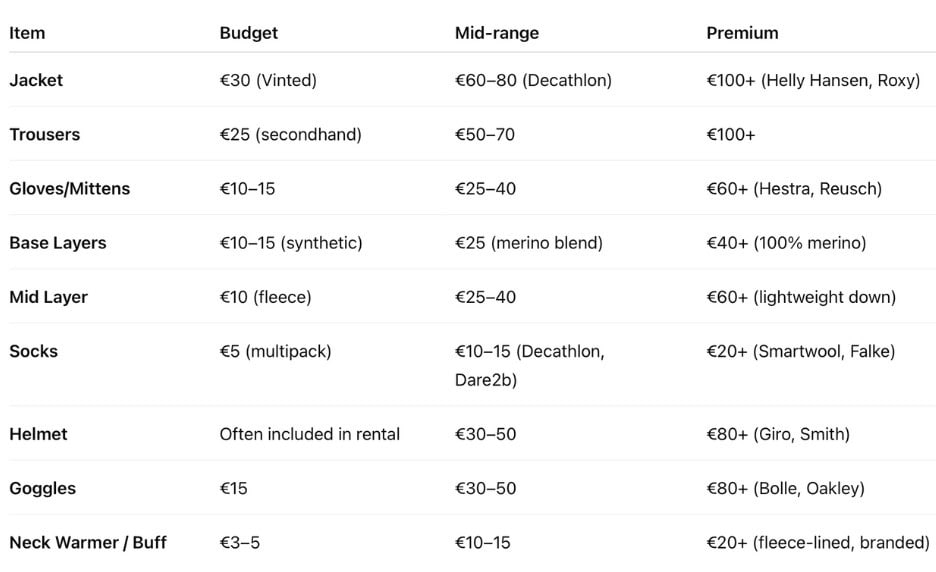
Recommendations for affordable kids' ski gear
1. Ecoski
Renting from Ecoski not only scores you on eco-friendly points but also keeps things budget-friendly. You can rent whole outfits for your kids, from hats to gloves, baselayers and the ski outer layers. Definitely worth checking out.
2. WhoSki.com
Think of it as Vinted but for ski gear! There are a lot of great deals there for kids and adults. Plus, you can even earn a little extra by selling your own gear.
3. Decathlon
Known for quality and affordability, Decathlon is a go-to for all your skiing needs. I find DEcathlon brilliant for base layers and thermals, cheap and comfortable and will last through the washing machine.
4. Mountain Warehouse
Mountain Warehouse is great for good quality, bright colours – perfect for spotting your little skier on the slopes and competitive prices. And here's a friendly reminder: Shop early for the best deals!
5. e-Bay
Whilst I’m not a big eBay shopper myself, there are some great deals to be found on here. It just takes some time to search and shop around to find what you’re looking for.
Top tips for ski gear your kids actually need
So, there you have it, fellow ski parents! With the right gear, a bit of prep, and a sprinkle of patience, your kids are in for an unforgettable ski experience.
For more help and support sorting out your first-time ski holiday, read these articles:
Share your own tips and experiences in the comments – and let me know if I’ve left off something important!
See you on the slopes!

One Comment