
That's La Plagne contains affiliate links and is a member of the Amazon affiliate program. If you make a purchase using one of these links, I may receive a small commission - at no extra cost to you. I never recommend anything I haven't experienced myself, and the commission helps me keep this site running at full speed! See my Disclosure Policy for extra information.
Oxygene Ski School Avalanche Safety Course: La Plagne
Stay Safe While Exploring Off-Piste
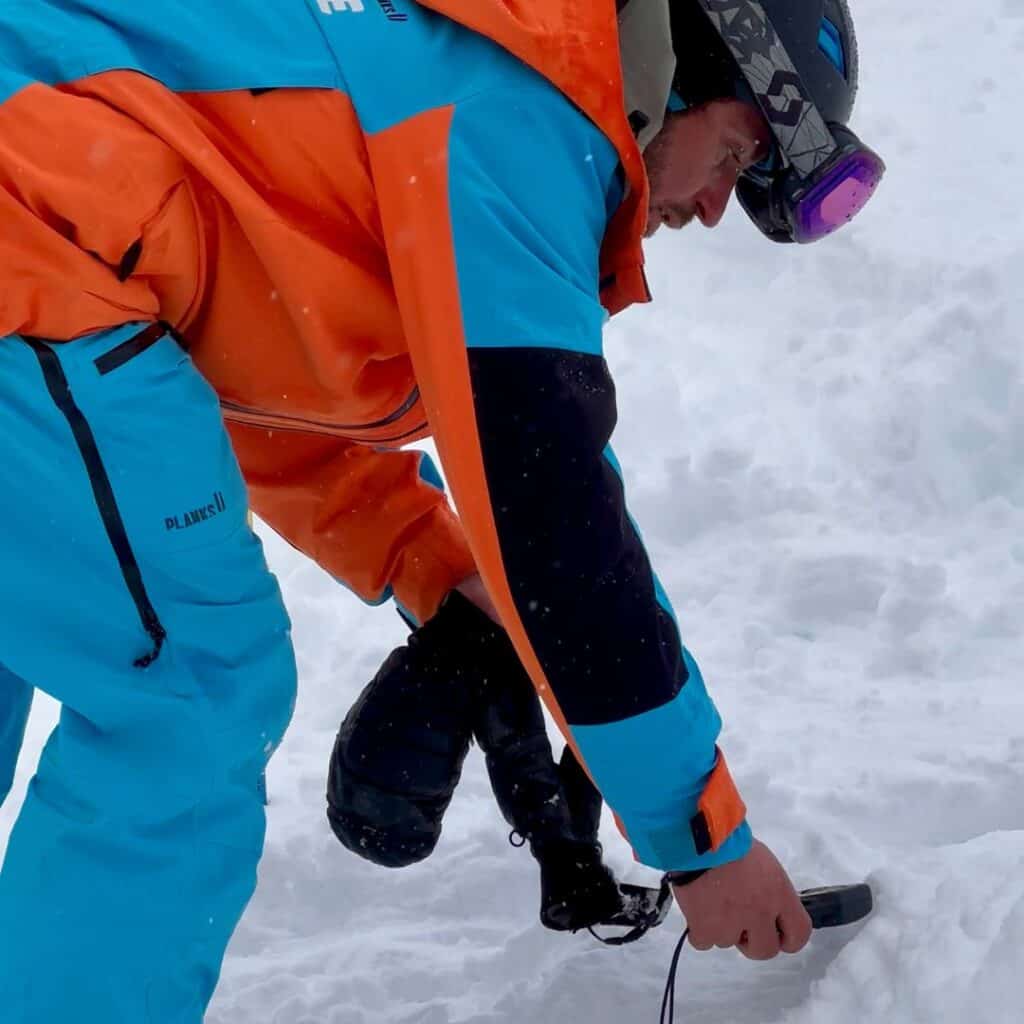
Skiing off-piste can be thrilling, offering untouched snow and a sense of adventure. But it also comes with inherent risks, including avalanches. Last week, I attended an avalanche safety course with Oxygene Ski School in La Plagne. Taught by Thomas, an experienced instructor, this beginner-friendly course introduced me to essential skills and equipment for avalanche safety.
Many skiers assume avalanches only occur in remote areas, but even close to resort boundaries, the dangers are real. Even here in La Plagne, I’ve had a friend caught in an avalanche between Belle Plagne and Bellecôte – only meters from the piste. He was rescued by the piste safety and is fine. But it shows you that this can and does happen.
Whether you’re an experienced skier or just starting, understanding the basics of avalanche safety could save lives. As someone living in a ski resort with my family, I know the importance of being prepared. And I’m not ashamed to admit that I am often not as well prepared as I should be. In this post, I’ll share what I learned, the key equipment to carry, and why I highly recommend Oxygene Ski School for beginners.
The first thing you need is this
Get my La Plagne deals straight to your inbox:
- Transfer codes
- Accommodation deals
- Ski lesson sales
- Ski hire offers
Avalanche Safety Isn’t Just for Pros
Many people think avalanche safety is only for expert skiers tackling extreme backcountry terrain. However, avalanches can happen anywhere off-piste, even in areas close to ski resorts. Beginners and intermediate skiers venturing off-piste should prioritise safety just as much as seasoned pros.
It’s also common to assume that staying within resort boundaries eliminates all risk. While groomed runs are regularly monitored, nearby off-piste zones can still pose avalanche threats. This is particularly true in resorts like La Plagne, which offer abundant off-piste terrain quite close to pistes. Knowing how to assess conditions and respond in an emergency is essential, no matter your skill level.
If you’re skiing with others, remember that your preparedness affects the entire group. Having the knowledge and equipment to assist in an avalanche rescue can make the difference between life and death.
Introducing Avalanche Safety to Families
Avalanche safety isn’t just for adults. It can seem terrifying to be talking about avalanches and children in the same sentence. But this winter, we have already seen a 14-year-old boy die in an avalanche in neighbouring Les Arcs. Truly tragic.
It’s crucial to introduce these concepts to children in an age-appropriate way. While kids may not need to operate transceivers or probes immediately, teaching them to respect the mountains and understand basic risks is a great starting point. Many ski schools, including Oxygene, can tailor lessons to families, ensuring everyone is involved.
One approach is to make it interactive. Show them how the equipment works or practice simple drills like staying together on the slopes. After I got home from this course with Oxygene, my 2 boys (6 and 8) played with the transceivers for an hour or so. We used them to play hide and seek around our apartment. It was a lot of fun, and they could easily handle the equipment independently. I will be taking them out to play something similar in the snow soon.
Beyond avalanche safety, general piste and ski safety should be a priority for families. Staying in control, observing signage, and understanding mountain rules are key to avoiding accidents. For a detailed overview of ski etiquette, check out my blog post on the Piste X Code, which covers everything you need to know.
Key Skills Learned in the Oxygene Course
The Oxygene Ski School course covered several foundational skills, giving me a hands-on understanding of avalanche safety. Here’s what we learned:
- How to Operate a Transceiver: We practised searching for signals in a simulated scenario, focusing on speed and accuracy.
- Effective Probing Techniques: Thomas demonstrated how to systematically probe the snow to locate a buried skier.
- Shovelling Methods: Using the right technique can save time and energy during a rescue.
We also explored other critical topics:
- Common Causes of Avalanches: Environmental factors, like rapid temperature changes and unstable snowpacks, as well as human errors like skiing in high-risk zones, are leading triggers.
- How to Locate People Buried Under Snow: Timing is everything. We learned about the “golden 15 minutes,” during which survival rates are highest, and practised working as a team to maximise efficiency.
My Experience with Oxygene Ski School
The course with Oxygene Ski School exceeded my expectations. Thomas, our instructor, was knowledgeable and approachable, breaking down complex concepts into simple steps.
We started with an on-the-snow classroom session covering the theory before carrying on to practise with the equipment. The hands-on drills were invaluable, giving me more confidence in using the tools and responding to a real avalanche scenario. However, I quickly realised that I needed to take these skills away and practice them. What we talked about a lot is how you need to snap into auto-pilot when something like this happens. The only way to do that is to practise with your equipment and know how to use it in high-pressure situations.
Thomas explained the basics clearly and the practical drills gave me a much better understanding of how to use the equipment.
Tips for Taking the Avalanche Safety Course with Oxygene Ski School
If you’re considering taking the avalanche safety course with Oxygene Ski School, a little preparation can go a long way towards making the most of the experience. Here are my top tips to help you get ready:
- Come with the Right Mindset
This course is designed for beginners to avalanche safety (not beginner skiers), so don’t worry about your experience level. Approach it as a chance to learn essential skills in a supportive environment. Remember, the goal is to leave feeling more confident and prepared, not to master everything at once. - Dress for the Weather
The course takes place outdoors, so dress warmly and in layers. Make sure you have waterproof gloves and sturdy boots or ski shoes, as you’ll be practising with equipment in the snow. - Bring Your Own Equipment (or Rent in Advance)
If you have an avalanche transceiver, probe, and shovel, bring them along. Practising with your own gear helps build familiarity, which is essential in an emergency. If you don’t have the equipment, Oxygene can provide it for an additional €20 per person. - Brush Up on Avalanche Awareness
While the course covers the basics, it’s helpful to review resources on avalanche safety beforehand. Knowing a bit about the avalanche risk scale or how transceivers work will give you a head start. - Make It a Group Activity
If you’re skiing with family or friends, consider taking the course together. Practising rescue scenarios as a group helps you understand how to work as a team, which is crucial in real-life situations. - Plan to Practice Afterwards
The skills you learn in the course are invaluable, but they need regular practice to stick. Schedule time after the course to rehearse with your equipment. You could even turn it into a fun family activity, like a treasure hunt with transceivers.
Why Choose Oxygene Ski School in La Plagne for Avalanche Safety
Oxygène offers a practical beginner-friendly avalanche safety course in La Plagne. Their 4-hour afternoon course runs from 13:00 to 17:00 and is perfect for beginners or those looking to refresh their skills.
Course Details and Pricing (at the time of writing):
- 1–2 Participants (Exclusive Experience): €285–€395 (depending on the season).
- 3+ Participants: €40 per person extra (equipment rental available for €20 per person).
- Seasonal Pricing:
- Low Season: €285
- Mid Season: €315
- High Season: €395
Booking is simple. Head to the Oxygene Ski School website or visit their office in La Plagne to secure your spot. Whether you’re skiing solo, as a couple, or with family, their personalised approach ensures you’ll gain confidence in tackling off-piste terrain safely.
Other ski schools and mountain professionals in La Plagne also offer off-piste and avalanche-safety training, so if you’re comparing options, check the format, group size and what equipment is included.
