
That's La Plagne contains affiliate links and is a member of the Amazon affiliate program. If you make a purchase using one of these links, I may receive a small commission - at no extra cost to you. I never recommend anything I haven't experienced myself, and the commission helps me keep this site running at full speed! See my Disclosure Policy for extra information.
The Story of La Plagne's Bonnet Rouge: 60 Years of the Red Hat Logo
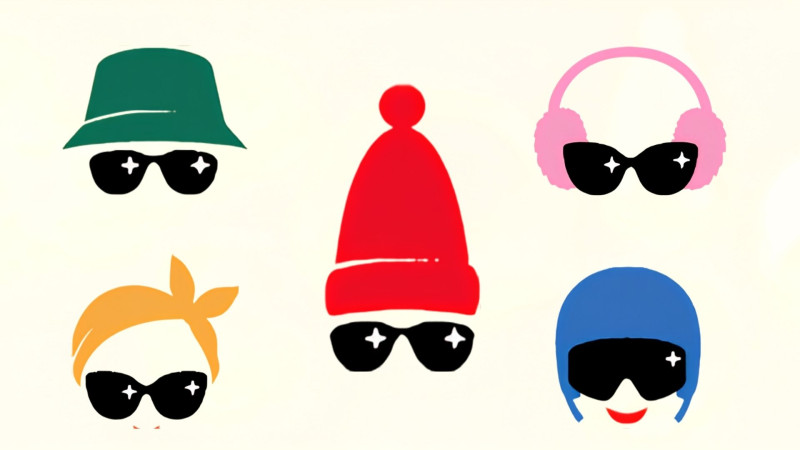
If you've ever been to La Plagne, you've seen it. It's on the lift passes, the piste maps, the bus stops, the piste bashers, and – in our house – on roughly 40% of the contents of the kitchen drawer. A little red bobble hat, perched on a face in dark sunglasses, looking extremely pleased with itself.
But have you ever wondered why a French ski resort has a bobble hat as its logo?
The answer involves a mayor who'd been in the Resistance, a smiling sun with a ski glove, a primetime TV game show, a sketch on the corner of a table, a dramatic rematch and, eventually, a trip to space. This winter the Bonnet Rouge turns 60, and I've lived under it for 20 of those years, so grab a vin chaud. Here's the full story.
Before the hat: how La Plagne was born
To understand the hat, you need to know how young La Plagne was when it got it: just five years old.
In the late 1950s, the valley above Aime was in trouble. The lead and silver mine that had kept local families going was closing, and young people were leaving for jobs in Lyon and Chambéry. The mayor of Aime, Dr Pierre Borrione – a local doctor who'd been part of the Resistance during the war – had a bold idea: turn the high summer pastures into a ski resort.
In 1960 he brought in architect Michel Bezançon to design it, and legendary ski champion Émile Allais came to inspect the site. His verdict was glowing: La Plagne had “extraordinary possibilities” and would be “the most original resort, with guaranteed sunshine and snow”.
The deal to build it was finally signed on Christmas Eve 1961 – in the middle of the night, after one of the negotiators dramatically put his pen down and refused to sign. That Christmas, La Plagne opened with:
- two drag lifts serving four slopes
- two hotels
- a ski hire shop
- a snack bar in a converted cowshed
Humble beginnings, but it worked. For the full story of the mines, the Resistance and the Olympics, read my history of La Plagne.
The first logo: a smiling sun
Here's the bit most people don't know: the Bonnet Rouge wasn't La Plagne's first logo.
When the Paris advertising agency Havas took over the resort's promotion, it leaned on La Plagne's big selling point: all that sunshine Émile Allais had raved about. So the first logo was a cheerful, smiley sun with rosy cheekbones, pointing the way to the resort with its ski glove.
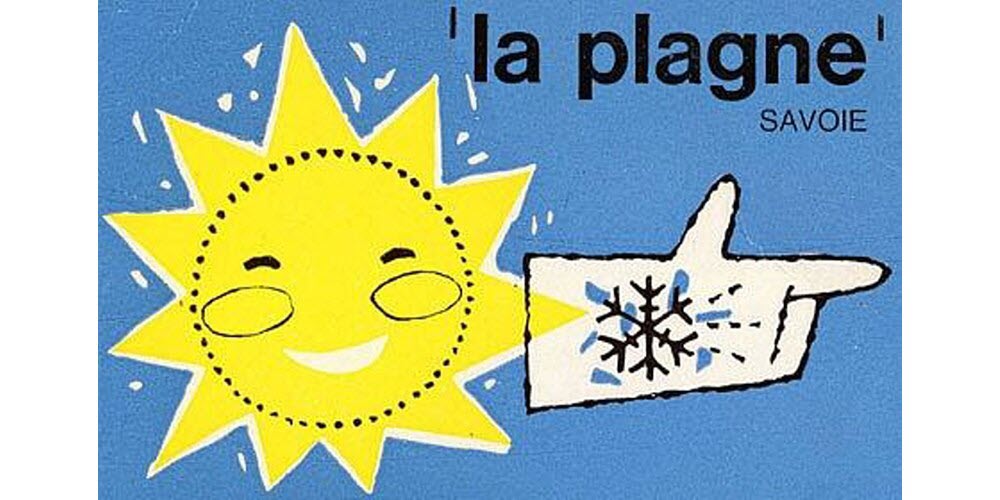
Cute? Yes. Memorable on a tiny black-and-white telly? Not so much. And that was about to matter.
The game show that changed everything
Picture weekend telly in 1960s Britain. The whole family round one TV set, Bruce Forsyth on the screen, everyone watching the same thing at the same time.
France had its own version of that man: Guy Lux. He was the king of French TV game shows for decades, and his biggest hit was Intervilles – French towns battling each other in gloriously daft challenges, usually involving water, costumes and at least one confused cow. Sound familiar? It should. Intervilles is the show that inspired Jeux sans frontières, which we Brits got to know as It's a Knockout.
Now imagine It's a Knockout, but on skis. That was Interneige: the winter spin-off, with French ski resorts taking on Swiss ones, live on French and Swiss TV in front of millions of viewers. For a tiny five-year-old resort that hardly anyone had heard of, getting on it was like winning the lottery.
And La Plagne didn't sit around waiting to be picked. One of the resort's team got himself introduced to Guy Lux in Paris through a friend at Havas, and the rest is history. In 1965, La Plagne was chosen for the 1966 series. Here's the line-up:
| Team France | Team Switzerland |
|---|---|
| La Plagne | Champéry |
| Les Deux-Alpes | Crans (now part of Crans-Montana) |
| La Mongie | Les Diablerets |
| Villard-de-Lans | St Moritz |
Each show had three sporting challenges on the snow and a quiz round all about the history of mountaineering. So: half ski race, half pub quiz. Brilliant.
Assembling the dream team
La Plagne went all out to win. The team captain was Émile Allais himself, and the resort called in two of France's top young racers, Annie Famose and Isabelle Mir. Two years later, both of them won Olympic medals at the 1968 Grenoble Games – not bad for a game show team.
Behind the scenes, the whole thing was organised by the resort's Club des Sports. That's the same Club des Sports that puts on the Born To Be Show today – and the same club both my boys now ski for, which I think is pretty cool.
The hat is born
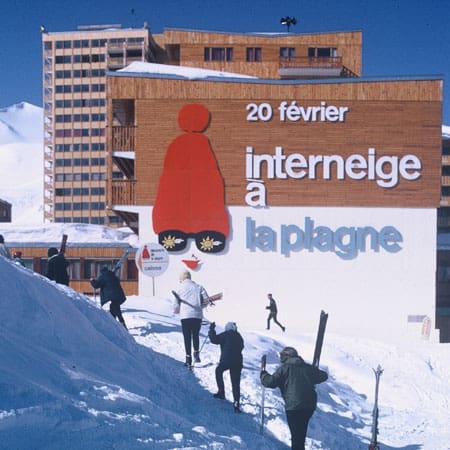
La Plagne's big day was set for Sunday 20 February 1966, against Crans, live on air from 1.30pm – and the games would be played right here on the snow front in Plagne Centre.
Cue mild panic. Millions of people were about to see La Plagne for the first time, on black-and-white televisions, and the resort's logo was… a yellow sun. On a grey screen. Not exactly unforgettable.
So the resort turned to its ad agency, Havas, and a graphic designer there called Mathieu Diesse. Legend has it he sketched the answer on the corner of a table. He kept the sun's smiley face, gave it a pair of dark sunglasses (very cool, very 60s) and plonked a bright red bobble hat on top. Simple, cheeky and impossible to miss, even in black and white. Everyone loved it.
Then La Plagne went all in:
- A giant version of the new logo went up on the front of the Jannu building in Plagne Centre, announcing “20 février – Interneige à La Plagne”.
- Hundreds of red bobble hats were handed out to the crowd on the day, so the whole snow front would be a sea of bobbles on camera.
Think about it: if you were watching at home in Paris, what would you remember? Not the scores. The mountain full of people in matching red hats. Marketing genius, 1966-style.
Showtime: a technical hitch, a rematch and a famous win
On 20 February 1966, Guy Lux and the TV crews rolled into La Plagne, and the place went wild. Locals who were there still talk about it: crowds everywhere, people squeezed onto the snow front and into the corridors of the galleries, and the feeling that their little resort was suddenly the centre of the universe. One remembered it simply as “a real party”.
Then came the twist. Only part of the show actually made it onto the nation's screens. (Live TV in 1966 – what could possibly go wrong?)
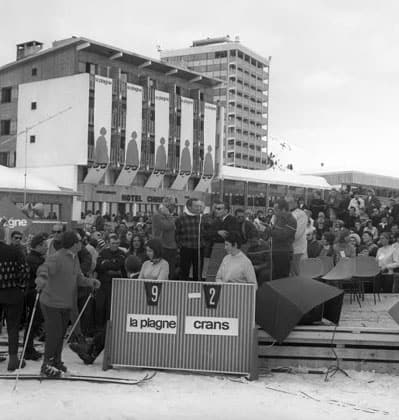
So, to everyone's surprise, the organisers called a rematch between La Plagne and Crans a week later, on Sunday 27 February 1966. The new rule: whichever resort won by the biggest margin would take home the 1966 Interneige cup.
This time the cameras caught every second – and La Plagne won by 10 points.
The cup was ours, the gamble had paid off, and the resort had a new nickname that would stick for good: la station au Bonnet rouge, the resort of the red hat.
The publicity was instant. Two days after the first show, the national newspaper Le Monde ran a big feature on La Plagne, calling it a model for how to build a modern ski resort. From then on, France never really stopped talking about the resort with the red hat.
Why the hat stuck around for 60 years
Plenty of logos are designed for one big moment and quietly forgotten. Not this one. The Bonnet Rouge became La Plagne's whole personality.
- It was the newspaper. The resort even had its own paper, called Le Bonnet de La Plagne.
- It went on everything. Bobble hats, posters, lift passes, medals, pens, stickers, keyrings, badges, caps and even Opinel knives. Somewhere in a loft in Surrey, there's a box of 1970s Bonnet Rouge pins with your name on it.
- It barely changed. New villages got their own little extras – Montalbert was given a stylised bird when it opened in 1980 – but always alongside the hat, never instead of it. The logo has been gently refreshed a handful of times since 1982, and “Paradiski” was added in 2003 when La Plagne linked up with Les Arcs.
- It went to space. French astronaut Jean-Pierre Haigneré took the La Plagne logo with him to the Mir space station. That's a bobble hat in orbit.
- It became a local joke. Former tourist office director Patrick Hazeaux, author of La Plagne, une belle histoire (we have his books on our shelves at home, and they're brilliant), remembers the saying that La Plagne “has a lot under its bonnet”.
And it's worked. La Plagne is now one of the most visited ski areas in the world, and the friendly little hat is a big part of why people remember it.
Names you'll spot on the piste map
Here's a fun one for your next ski day. Lots of the people who built La Plagne now have pistes named after them, so you've probably skied past these legends without realising:
- Émile Allais – the red run in the Biolley sector, from near the Dromadaire drag lift down to La Roche.
- Edmond Blanchoz – a blue run that joins the Émile Allais halfway down, named after one of the men who helped grow the ski area.
- Jean-Luc Crétier – the slalom stadium in Plagne Centre is named after France's 1998 Olympic downhill champion.
The Bonnet Rouge timeline
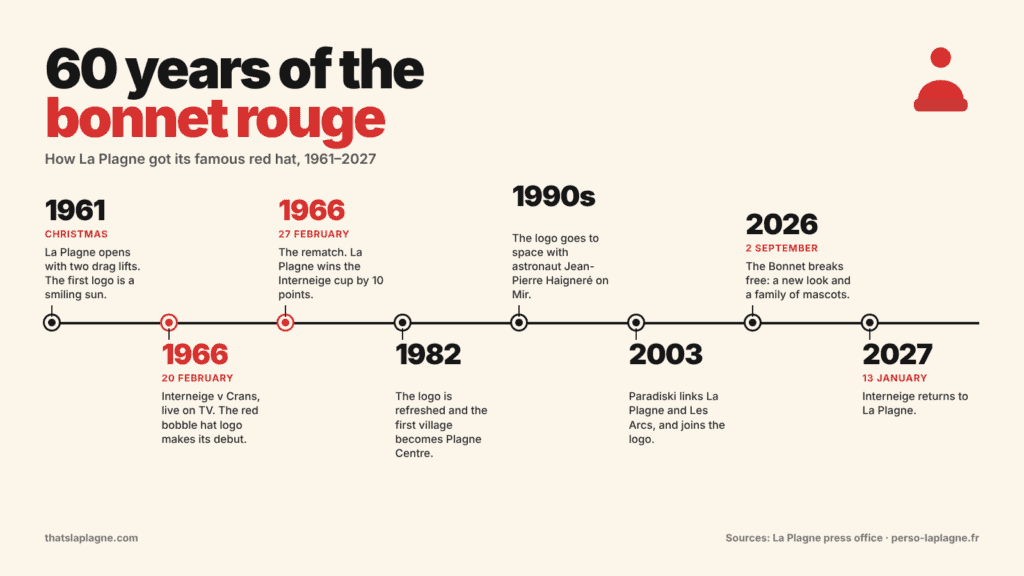
2026: the Bonnet breaks free
For its 60th birthday, the Bonnet Rouge has had a glow-up. On 2 September 2026, La Plagne launched a new identity designed by Lyon agency Night Session, which was named Agency of the Year at the 2026 Ours de la com awards and is also working on communications for the 2030 Winter Olympics.
The brief was to look back, not wipe the slate clean. The new style borrows the bold, fun spirit of those early Havas campaigns – big chunky lowercase type, pops of colour and cheeky slogans – and makes it feel fresh again. As the agency's boss put it: “La Plagne isn't becoming modern. It always has been.”
Meet the Bonnet's new family
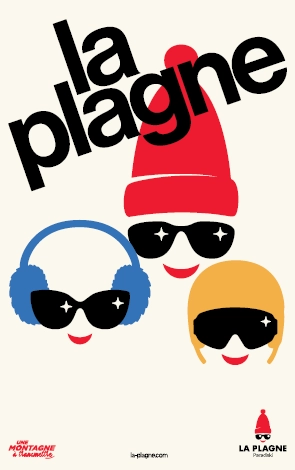
The big change is that the Bonnet is no longer just a logo. It's become a whole family of mascot characters, each wearing different mountain kit: the classic red bobble hat, plus friends in earmuffs, a helmet, a bandana and more.
The idea behind them is lovely: they're inspired by Russian nesting dolls. La Plagne is one big resort with lots of different villages and personalities tucked inside, and the dolls are passed down through families, just like La Plagne. The resort says 47% of its owners and guests are loyal regulars. (Hi, if you're one of them!)

The tourist office says the mascots show off “the variety and vastness of our playground, because in La Plagne, everyone can experience the mountains in their own way.”
You'll start spotting the new characters on posters, the website and around the villages this winter, sometimes swapping hats for the occasion. My money's on the earmuffs becoming a cult favourite.
13 January 2027: Interneige is back!
And here's the bit that made me squeal. To celebrate the Bonnet's birthday, La Plagne is bringing back Interneige, 61 years after the show that started it all.
The revamped version takes place on Wednesday 13 January 2027. The guest list is a nod to what's coming next: La Plagne is inviting the resorts that will host the 2030 Winter Olympics (La Plagne's own Olympic track will host the bobsleigh, luge and skeleton), along with key people from the mountain world. Expect fun, informal team challenges in true Guy Lux spirit – hopefully with fewer cows – and the whole resort dressed up for the occasion, with locals and businesses joining in.
We don't yet know whether the public will be able to watch, or exactly where it'll be. I'll update this post (and my winter events guide) as soon as I hear. I'm also lobbying hard for a mums' team. Fingers crossed.
Where to see La Plagne's history for yourself
If this has given you the history bug (or it's snowing sideways and the kids need entertaining), here's where to find the real thing in resort.
The Plagne Centre museum
The little museum above the main bus station in Plagne Centre is a hidden gem. It covers how the resort was built, the lead and silver mines, La Plagne's role in the Resistance, and the bobsleigh track and the 1992 Albertville Olympics, with old photos, models, tools and documents.
The Resistance memorial
Just opposite the bus station in Plagne Centre, look out for the aeroplane statue and plaque. They remember the night of 10–11 March 1944, when the Allies parachuted supplies to the local Resistance. Dr Borrione himself was part of the Resistance in Aime during the war.
The Olympic bobsleigh track
Built for the 1992 Games and getting ready for 2030, the track is still the place to feel La Plagne's Olympic legacy, from the spectator areas or, if you're brave, from inside a bob. Read about the track's big renovation plans.
A little retro shopping
Posters de Savoie is a little workshop in Longefoy making beautiful retro-style mountain prints, including a reproduction of that very first 1961 sun logo. I'm a big fan – we've got a couple of their posters up on our walls at home. They're classic, beautifully stylised and, to my mind, the best souvenir you can take home from La Plagne. Far better than another fridge magnet.
That's the La Plagne Bonnet Rouge at 60
So there you have it. A mining valley that needed a future, a resort that started in a cowshed, a smiling sun that wasn't quite bold enough for telly, and a red bobble hat that won a game show, went to space and is still grinning at us from every lift pass 60 years later.
Next time you're standing at the snow front in Plagne Centre, have a look up and imagine the crowds in their red hats in February 1966, cheering on Émile Allais and the team. Then go and buy yourself a bobble hat. It's tradition.
See you on the slopes!
La Plagne Bonnet Rouge FAQs
Why is La Plagne's logo a red bobble hat?
It was created in 1966 for the TV game show Interneige. TV was black and white, so La Plagne needed a bold, simple symbol. Designer Mathieu Diesse added sunglasses and a bright red bobble hat to the resort's original sun face.
Who designed the La Plagne logo?
Mathieu Diesse, a graphic designer at the Paris advertising agency Havas, in 1966.
Did La Plagne win Interneige?
Yes. After a first match against Crans on 20 February 1966 was only partly broadcast, a rematch on 27 February decided the cup. La Plagne won by 10 points.
What was La Plagne's first logo?
A smiling sun pointing the way to the resort with a ski glove, used from the resort's early years until the Bonnet Rouge arrived in 1966.
What are the new La Plagne mascots?
In 2026, Lyon agency Night Session turned the Bonnet into a family of mascots inspired by Russian nesting dolls, each wearing different mountain kit, such as a bobble hat, earmuffs or a helmet.
When is the new Interneige?
Wednesday 13 January 2027, with the 2030 Winter Olympics host resorts invited to take part.
