
That's La Plagne contains affiliate links and is a member of the Amazon affiliate program. If you make a purchase using one of these links, I may receive a small commission - at no extra cost to you. I never recommend anything I haven't experienced myself, and the commission helps me keep this site running at full speed! See my Disclosure Policy for extra information.
New La Plagne ski lift: from Aime–La Plagne. Latest 2026 Plans, Route & Public Consultation
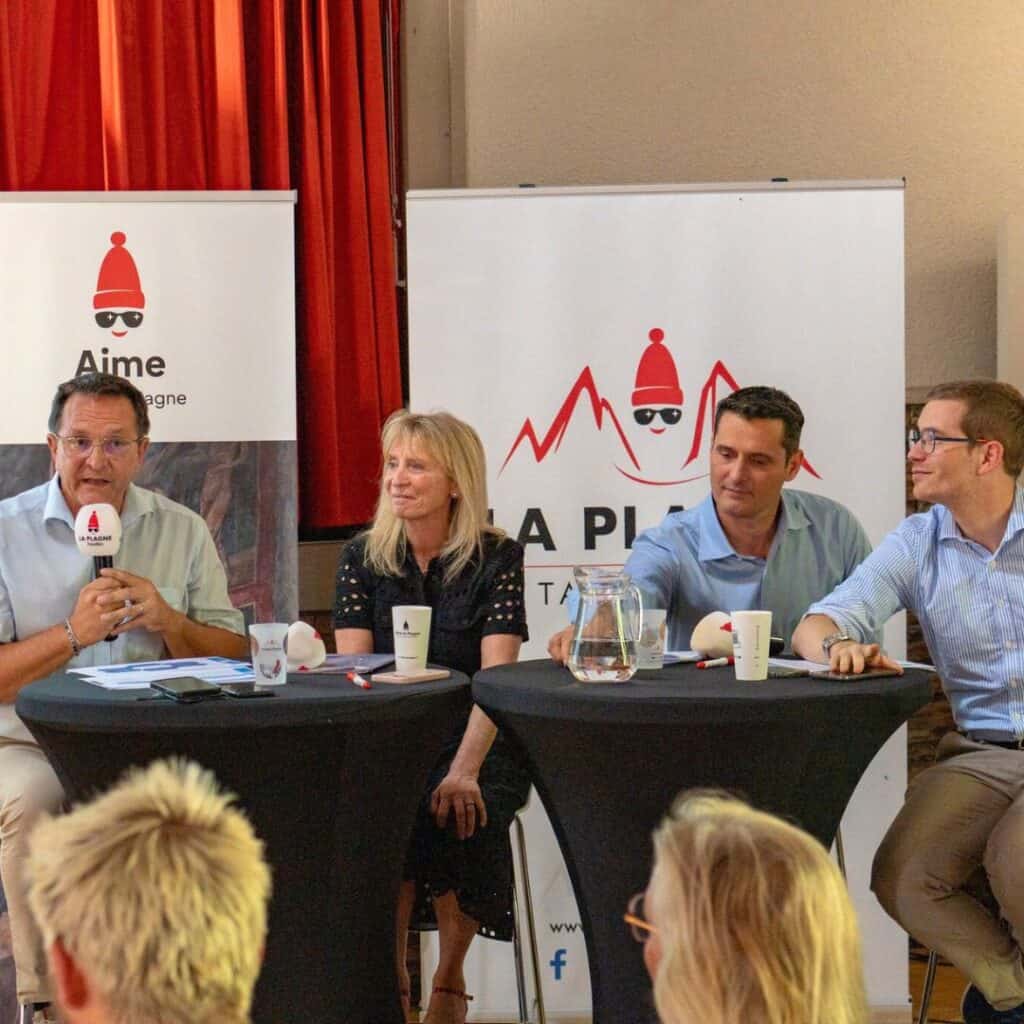
Is Aime getting a gondola to La Plagne? Here’s where the project actually stands for 2026/2027
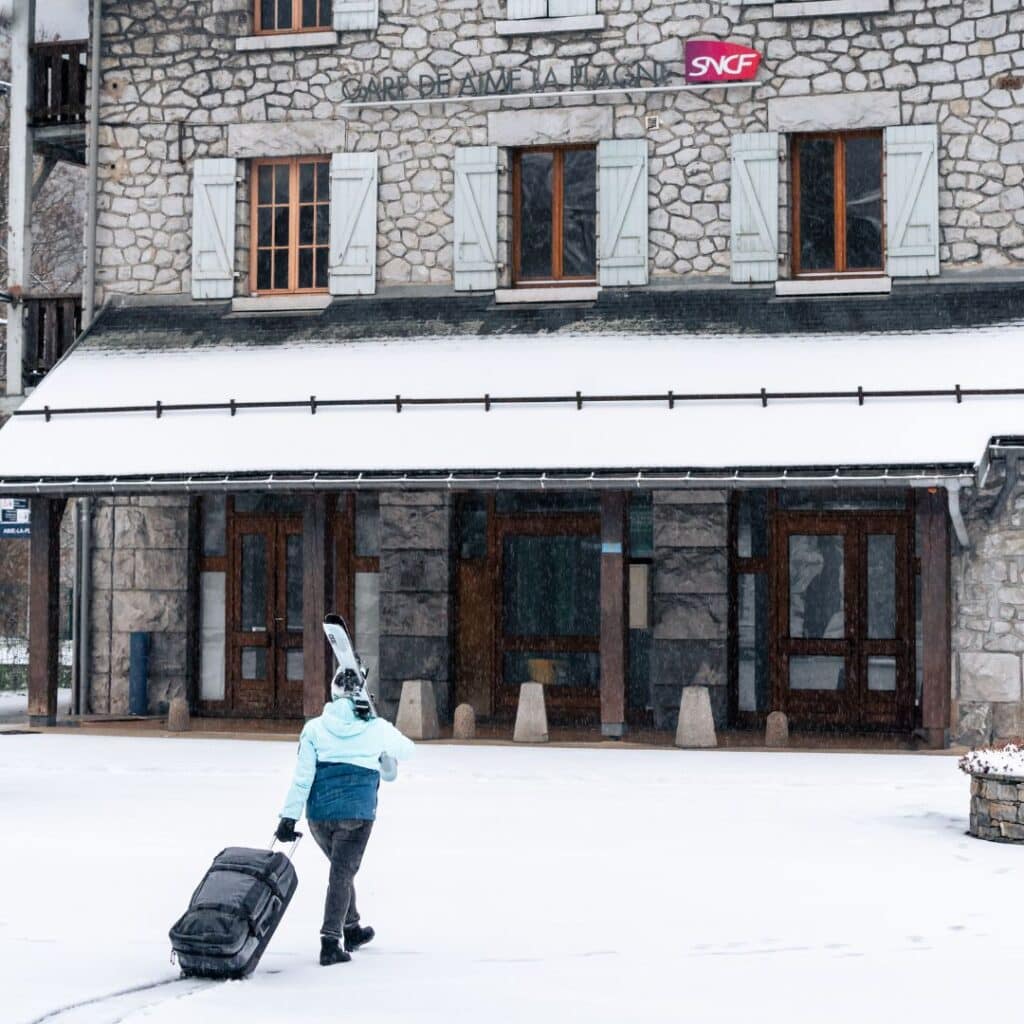
If you’ve ever arrived at Aime-La-Plagne train station with children, skis, suitcases and the slightly daunting prospect of another 30-odd minutes winding up the mountain, this is a project worth knowing about.
Plans for a new gondola connecting the valley with La Plagne have been talked about locally for around 40 years.
But this is no longer just one of those “maybe one day” La Plagne conversations.
In 2025, the two local communes presented much more detailed proposals for a valley lift. Since then, the project has moved forward again and in summer 2026 it entered formal public consultation.
The proposed Ascenseur Valléen de La Grande Plagne would run from Aime-La-Plagne SNCF train station, stop at La Roche beside the Olympic bobsleigh track, and continue up to Plagne Centre.
The goal remains to have it running before the 2030 Winter Olympic and Paralympic Games, when La Plagne’s bobsleigh, luge and skeleton track will once again be an Olympic venue.
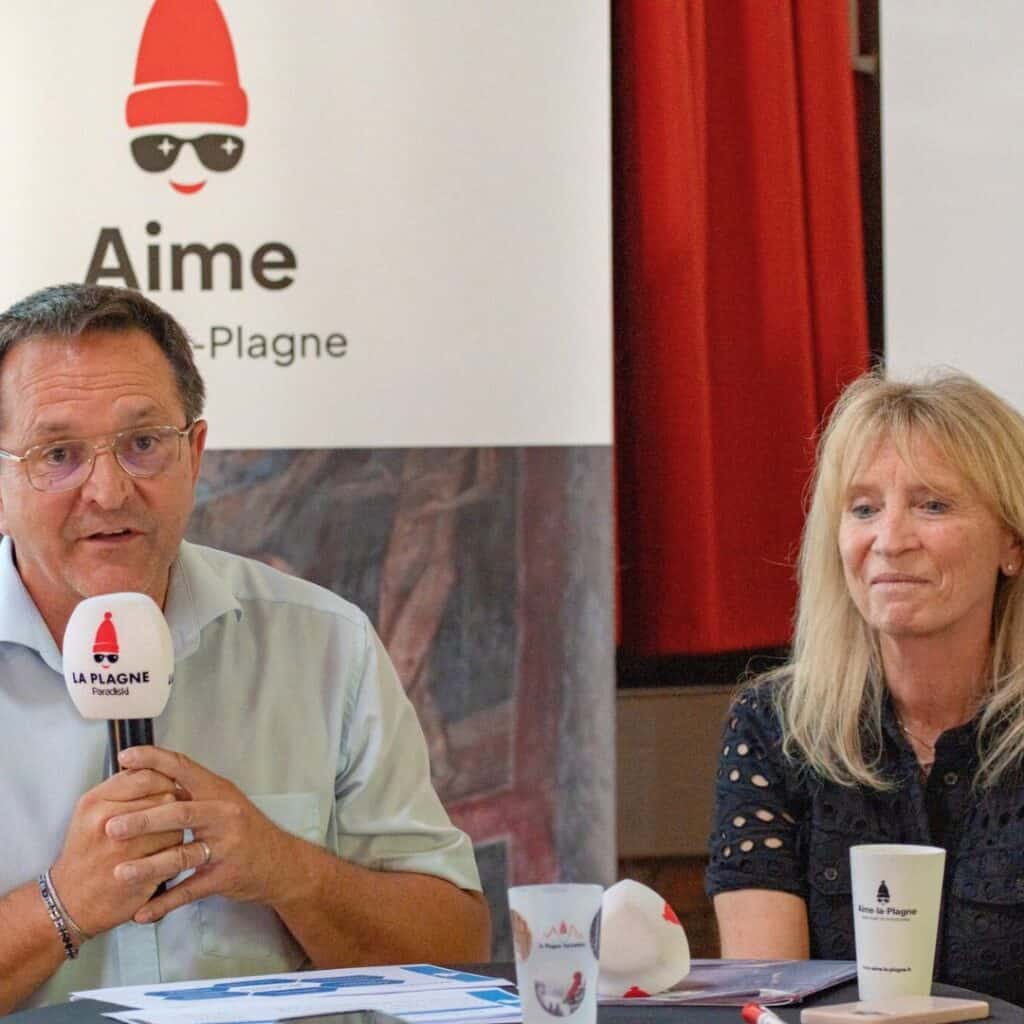
And before anyone gets too excited, no, the gondola is not officially confirmed yet.
But the project is considerably further down the road than it was when I first wrote about it.
The quick 2026 update
Here’s the short version if you just want to know what has changed.
The project is now in a formal concertation préalable, or public consultation, running from 27 August to 8 October 2026.
The current proposal is for:
- Aime-La-Plagne SNCF station → La Roche → Plagne Centre
- two gondola sections
- three stations
- approximately 6 km of cable
- around 1,310 metres of vertical rise
- at least 10 people per cabin
- a journey of under 20 minutes
- a new park-and-ride in Aime
- improved connections with the train station and local bus network
- an intended opening before the 2030 Winter Olympics.
Most importantly, this consultation is taking place before the final decision to build the project.
So this is not simply an information meeting telling residents what has already been decided. The public is being invited to comment on whether the project should go ahead, its impacts and how it could operate.
And it you want the opportunity to have your say in the public consultation, follow the link here.
What’s actually being proposed?
This is one of the biggest changes since my original article.
Last year, we were still talking about different possible routes, including a more direct lift between Aime and Plagne Centre.
That choice now appears to have been made.
The route currently being taken forward is what the official consultation documents call the “indirect” or “Olympic” route.
It would have two sections:
Section 1: Aime-La-Plagne SNCF station → La Roche
Section 2: La Roche → Plagne Centre
There would therefore be three stations:
Aime-La-Plagne — the bottom station, next to the SNCF train station.
La Roche — the intermediate station, below the bobsleigh track and close to the existing La Roche chairlift.
Plagne Centre — the top station beside the current bus station, with onward access into the resort.

The direct Aime–Plagne Centre route was studied previously, but the route via La Roche was selected in 2025. One reason is obviously the 2030 Olympics: the intermediate station would provide access to the bobsleigh, luge and skeleton venue.
But it also creates a possible transport connection for villages and hamlets around La Roche which currently rely heavily on the road.
How big would the Aime–La Plagne ski lift actually be?
The latest official consultation documents give us much more detail about the proposed lift.
The current route is approximately 6 kilometres long, climbing around 1,310 metres from the valley floor to Plagne Centre.
The latest figures are:
- Aime station altitude: approximately 658m
- La Roche station: approximately 1,517m
- Plagne Centre station: approximately 1,968m
- first section: approximately 3.7km
- second section: approximately 2.3km
- around 145 cabins currently envisaged
- minimum 10-person cabins
- maximum line speed estimated at 7m/sec
- initial target capacity of at least 2,000 people per hour
- total journey time estimated at under 20 minutes.
That last figure is still one of the headline attractions.
The official dossier compares it with approximately 34 minutes by car or bus in winter.
A note on that 2,600 people-per-hour figure…
If you remember my original post saying 2,600 passengers an hour, you haven't imagined it.
That was the figure presented previously.
The current consultation document now describes 2,000 passengers per hour as the minimum initial capacity, with the possibility of increasing capacity by adding cabins.
A procurement notice published this summer goes further and refers to 2,600 passengers per hour in each direction as the eventual capacity.
So I've updated this article rather than pretending nothing changed: 2,000/hour appears to be the current base specification, with 2,600/hour still envisaged as the final potential capacity.
That is exactly the sort of detail I’ll be listening for clarification on during the consultation meetings.
What happens when you get off the train in Aime?
For holidaymakers, this is probably the bit that makes the project easier to picture.
The proposed bottom gondola station would sit on the opposite side of the railway tracks from the current main entrance to Aime-La-Plagne station.
The existing pedestrian underpass beneath the railway would be extended/opened through to the gondola side, creating an accessible connection between the train station and the lift.
The plans also include things like:
- ticketing
- information
- lockers
- toilets
- improved pedestrian connections.
SNCF is separately planning accessibility improvements at Aime station, including lifts beside the existing underpass.

So in theory, the journey could become:
Train → walk through the station → gondola → Plagne Centre.
Rather than:
Train → find transfer → load luggage → drive up the mountain → unload everything again.
For anyone who has ever tried to organise that with children, skis and approximately 847 gloves, you can see why this project has attracted attention.
What about parking in Aime?
A large park-and-ride is still part of the plans.
The current proposal is for a multi-storey car park alongside the valley gondola station with capacity for around 1,000 vehicles, although the exact footprint still has to be confirmed.
A new road connection from the RN90 would also be created. The solution currently being studied involves a new roundabout and changes around the existing Aime Centre / Val Plagne commercial-area junction.
The idea is that drivers coming along the Tarentaise valley could leave their cars at Aime and continue up to resort by gondola instead of joining the mountain road.
One important update from my original article: the old parking prices I quoted are not confirmed current prices.
The latest official documents specifically say that future tariffs and operating arrangements are still to be decided, and are actually among the subjects open for discussion during this consultation.
So I’m removing the old €9 / subscription parking figures for now rather than presenting them as decided.
What happens at La Roche – the mid station
La Roche has become a much more important part of the project than it appeared in some of the early proposals.
The intermediate station would sit below the bobsleigh track, close to the existing La Roche chairlift.
That means it could do several jobs at once.
During the 2030 Olympics, it would provide transport to the bobsleigh, luge and skeleton venue.
Outside the Olympics, it could give passengers direct access to the ski area via La Roche.

And the wider transport plan could connect surrounding communities including Crête Côte, La Roche d'en Haut, Plangagnant, La Roche, Les Charmettes and Prariond through reorganised local shuttle routes.
That is important because this isn't being presented purely as a ski-tourist lift.
One of the arguments behind the project is that it could become part of the everyday transport network between the valley and the mountain.
Whether it actually works that way will depend heavily on things like operating hours, prices and those connecting buses. Most of which haven't yet been finalised.
And what happens when you arrive in Plagne Centre?
The proposed top station would sit in Plagne Centre, close to the existing bus station.
A pedestrian underpass beneath the departmental road would connect the gondola station with the bus station, tourist office and onwards towards the snow front.
There is also an idea, still to be confirmed, of creating a piste from the gondola station so passengers could potentially access the ski area skis-on.
For me, this is one of the bits worth watching closely.
A lift that gets you efficiently from Aime to Plagne Centre is useful.

A lift that also connects cleanly into the resort buses, pistes and other villages is what could actually make it practical.
Will people really use it?
This was one of the big questions at the original public meeting, and it still is.
The latest traffic studies forecast nearly 400,000 individual return journeys in the first year, rising to around 540,000 after ten years.
According to the current forecasts:
- roughly one third of users would be locals, workers and schoolchildren
- around half would be holidaymakers staying in the area
- the remaining users would mainly be day visitors.
The bigger aim is to persuade some people who currently drive or travel by coach to use rail + cable transport instead.

That could include:
- holidaymakers arriving by train
- local residents
- seasonal workers
- schoolchildren
- day skiers
- organised groups and tour operators.
And this is where the project gets more interesting than simply “a new ski lift.”
If it works properly, it could change how people move between the valley and resort all year round.
If the train connections, opening hours, prices or local buses don't work… people may simply continue driving.
Building the gondola is only one part of that equation.
How often would the gondola run?
Last year I published proposed winter and summer opening hours presented at the local meeting but those should now be treated as old proposal figures. Because the latest consultation documents make it clear that exact opening times are not yet decided.
At the moment, the two communes envisage approximately:
- 19 weeks of winter operation
- 8 weeks in summer
- 4 weeks during the interseason.
But the exact dates, daily opening hours and ticket prices are still to be confirmed.
Again, those are specifically things the public can comment on during the current consultation.
For local families and workers, I'd argue this matters nearly as much as the lift itself. A gondola is only a genuine alternative to the car if it's running when people actually need it. So the argument that locals can reliably use this to e.g. get to work, children to get to school, etc., is not the full story.
How much will it cost (and who’s paying)?
This figure has changed since my original post.
The proposal presented locally in 2025 had a headline cost of €106 million.
The official CNDP project page now gives an overall estimated project cost, at the point the project was referred to the commission, of €118.08 million.
At the same time, the current consultation dossier gives a €94 million excluding VAT target for the design-and-build contract itself.
That €94m includes:
- the two lift sections
- the three gondola stations
- the Aime park-and-ride
- the new RN90 road connection.
It does not include separate works being managed by RTE around the high-voltage electricity lines or the SNCF work connecting the railway station with the gondola station.
So rather than giving you one neat number and pretending the finances are simple, this is what I would take from the current documents:
€94m HT is the target for the main design-and-build package, while €118.08m is the broader estimated project cost listed by the CNDP at this stage.
I’ll update this again if a clearer final funding breakdown is presented during the consultation.
Who is actually behind the project now?
This has changed too since the original meeting and proposal in 2025.
The two communes, Aime-La-Plagne and La Plagne Tarentaise, started and developed the project locally.
But responsibility for delivering the gondola has now been transferred to SOLIDEO Alpes 2030, the public body responsible for delivering infrastructure connected with the 2030 Winter Olympic and Paralympic Games.
Several organisations are involved:
- SOLIDEO Alpes 2030 — the gondola, stations and park-and-ride.
- DREAL Auvergne-Rhône-Alpes — the road access from the RN90.
- RTE — changes required to the high-voltage electricity infrastructure where it crosses the proposed route.
- SNCF Gares & Connexions — works connecting and improving access around Aime-La-Plagne train station.
The communes remain closely involved and would ultimately be responsible for operating the gondola after the Games, potentially through a dedicated intercommunal organisation.
Is this really all about the 2030 Winter Olympics?
The Olympics have undoubtedly accelerated the project.
La Plagne's bobsleigh track, originally built for the 1992 Albertville Winter Olympics, is due to host bobsleigh, luge and skeleton again for Alpes Françaises 2030.
A station at La Roche would provide a lower-carbon transport link to that venue from both the valley and resort.
But the official justification goes much further than a few weeks of Olympic transport.
The stated aim is for the gondola to leave a permanent transport legacy:
- reducing reliance on the mountain road
- encouraging more train travel
- helping workers travel between valley and resort
- connecting local communities
- reducing traffic
- supporting summer tourism
- creating an alternative route if the road is blocked.
Whether the gondola genuinely delivers all of that is exactly what this consultation is supposed to test.
What about the environmental impact?
Calling the gondola a “decarbonised” transport solution doesn't mean building it has no environmental impact.
And the new consultation documents are much clearer about this than the information available when I wrote this original post.
Initial wildlife surveys have identified protected or important habitats and species along the proposed route.
Construction would require some woodland clearance, and some natural habitats and wetland areas could be affected.
The project would also introduce new stations, pylons, cables and moving cabins into a very visible Alpine landscape.
There are also questions around:
- streams and watercourses
- drainage
- construction noise
- night-time lighting if required
- avalanche and other mountain risks
- disruption to the RN90 and roads around Plagne Centre during construction.
Further environmental and landscape studies are ongoing, and if the project goes ahead the developers would be required to avoid and reduce impacts where possible and compensate for certain remaining impacts.
For me, this is one of the important parts of the conversation.
There is a strong argument for reducing the huge number of cars travelling up and down the mountain.
But there is also a very real physical cost to constructing six kilometres of new cable infrastructure through the mountainside.
Both things can be true. It will be interesting to see the feedback around this at the next public meeting.
Is the gondola definitely going ahead?
No. That's probably the most important thing to understand right now.
The project has progressed significantly, but the official consultation dossier specifically says this process is happening before the decision to build the gondola.
One possible outcome is still that the project does not proceed.
What has changed since last year is that the project now has:
- a selected route
- much more detailed feasibility work
- SOLIDEO involvement
- environmental studies underway
- a formal public consultation
- an active procurement process for a potential designer/build contractor.
So we're definitely beyond “someone drew a gondola on a map.”
But we're also not at “book your train for 2029 and step straight into the lift.”
Yet.
What happened to the spring 2026 public vote?
If you read an earlier version of this article, you might remember me saying residents would vote on the project in spring 2026.
That was based on the timeline presented publicly at the time.
The process has since changed.
Instead, the project is now going through a formal public consultation under the French Environmental Code, overseen by independent guarantors appointed by the Commission Nationale du Débat Public, CNDP.
The consultation is designed to:
- give the public access to the project information
- collect questions and opinions
- discuss whether the project is appropriate
- identify concerns
- potentially modify aspects of the project before later decisions are made.
So this is not a straightforward yes/no referendum. That distinction matters but it's important to know we still have input into the project.
How can you have your say?
The public consultation runs from 27 August to 8 October 2026.
Anyone can read the consultation documents and submit comments online during that period.
You don’t need to be French, live locally or write in French to take part. The consultation team is keen to hear from international visitors and English-speaking La Plagne users too, and there are already contributions on the official platform written in English.
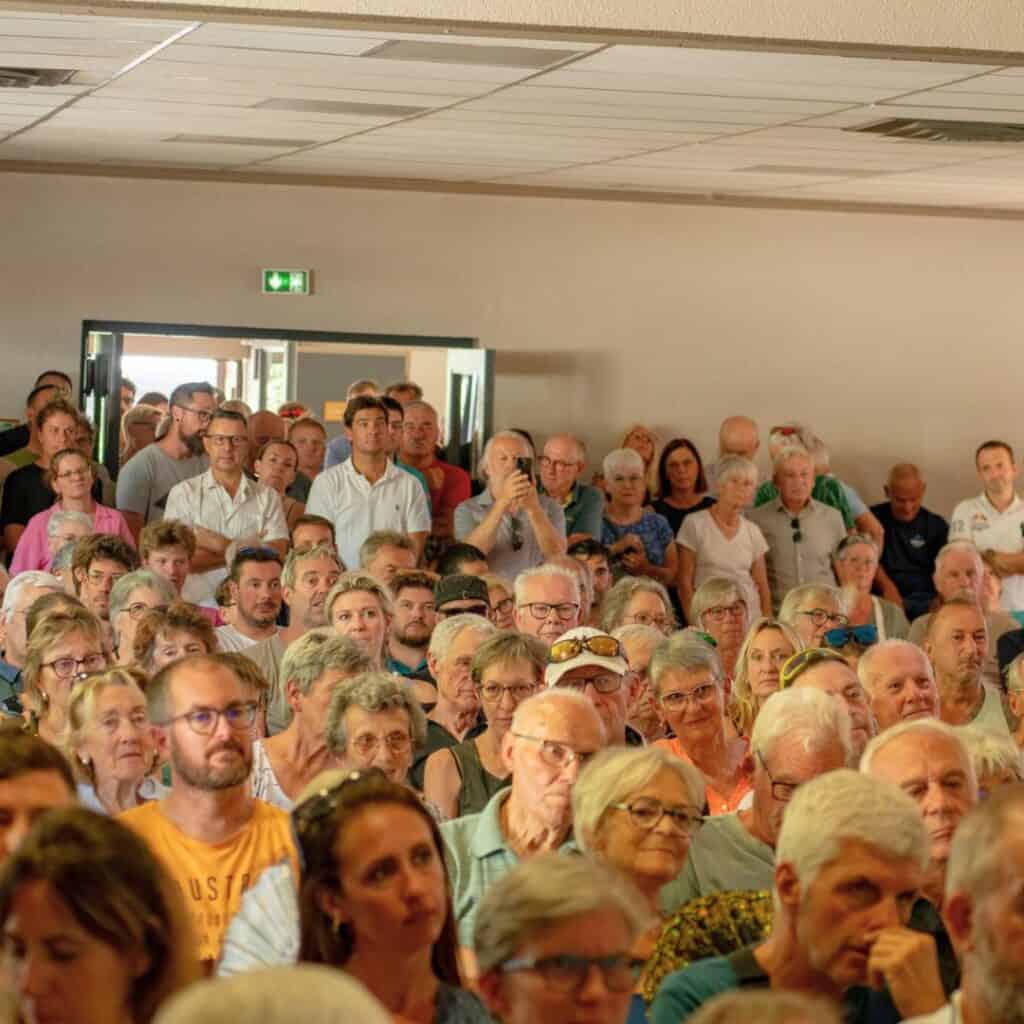
If you regularly ski in La Plagne, own property here, work here, travel here by train or simply have a view on how the project could affect future holidays, you can add your opinion directly to the consultation.
Positive, negative or somewhere in between! This is the stage when they’re asking for public feedback.
There are several in-person events too.
Thursday 3 September
Information stands are planned:
Morning: Aime-La-Plagne market
Afternoon: outside La Plagne Tarentaise mairie in Mâcot.
Monday 14 September 2026
Public meeting — 18:00–20:00
Salle polyvalente, Mâcot-La-Plagne.
This is the main opening public meeting and will cover the project, timeline and consultation process, with opportunities to ask questions and give views.
Online registration is recommended because registered attendees will be given priority if the room fills up.
Monday 5 October 2026
A closing public meeting is currently advertised by Aime-La-Plagne mairie for:
18:00 at the Halle des Sports / Gymnase des Versants in Aime-La-Plagne.
There are also plans for public workshops, including one aimed specifically at children and young people in the two communes.
I’ll be following the meetings and updating this page as new information comes out.
What happens after the consultation?
The timeline is now much clearer.
- The consultation closes on 8 October 2026.
- Independent CNDP guarantors will then publish their report within one month.
- The project owners then have up to two months after that report to explain what they intend to do next.

If the project continues:
- September 2026–May 2027: competitive design process
- First half of 2027: expected public inquiry as part of the environmental and planning authorisations
- By the end of 2027: planning and environmental decisions expected
- End of 2027: construction could begin, assuming the necessary approvals are granted
- By autumn 2029: targeted opening of the gondola.
That leaves very little slack in the programme because the infrastructure needs to be operational before the 2030 Games.
So although “2029 opening” remains the ambition, there are still several significant stages to get through first.
What would this mean for family ski holidays in La Plagne?
This is still the bit I find easiest to picture.
You get off the train in Aime with three children, bags, skis and all the random stuff a family somehow accumulates on a ski holiday.
Instead of finding a transfer and loading everybody into a minibus for the drive up the mountain, you walk through the station and get onto a gondola.
Less than 20 minutes later, you're in Plagne Centre.
That's the appealing version of the story.
And for families who already want to travel to the Alps by train, it could remove one of the biggest faffs in the journey: that awkward final stretch between railway station and ski resort.
It could also make day trips and car-free holidays genuinely easier.
BUT – because there's always a but – the lift itself won't decide whether families actually use it.
I'll be watching things like:
- How much will it cost?
- Will ski passes include it?
- How late will it run?
- Will it operate every day?
- What happens with large suitcases and ski bags?
- How easy will onward travel be if you're staying in Belle Plagne, Bellecôte, Plagne 1800 or elsewhere?
- Will train timetables improve to match it?
- What happens during bad weather?
- How easy will it really be with a pushchair or small children?
Those are the details that turn an impressive infrastructure project into something families actually use.
And they're exactly the sort of questions I want answered before I tell anyone this is going to “transform” their holiday.
My take: this project just became much more real
When I first wrote about the Aime–La Plagne gondola, it still felt like one of those huge local projects that could either become reality or disappear back into another decade of discussions.
It doesn't feel quite like that anymore.
There is now a defined route.
There are detailed plans for the three stations.
Environmental studies are happening.
SOLIDEO has taken over delivery of the project.
A design-and-build procurement process has started.
And, most importantly right now, the public consultation is underway.
That doesn't mean it's a done deal.
Nor does it mean there aren't legitimate questions about the cost, the landscape, wildlife, construction and whether enough of us will genuinely leave our cars behind.
But we've definitely moved from:
“Wouldn't it be interesting if they built a gondola from Aime?”
to:
“This is what they're currently proposing to build — what do we think?”
And that is quite a big shift.
Want the next update first?
I'm going to keep this article updated as the consultation progresses, including what comes out of the September public meeting and any changes made to the project afterwards.
If you want the local version rather than trying to translate 30 pages of French planning documents yourself, sign up to my newsletter and I'll send the important bits when we actually know something new.
No rumours.
No glossy resort press release.
Just what has changed, what it means and whether it's actually useful for your next La Plagne trip.
The first thing you need is this
Get my La Plagne deals straight to your inbox:
- Transfer codes
- Accommodation deals
- Ski lesson sales
- Ski hire offers

Been following you for a bit now and love your insites and tips. My husband and I have a chalet at Champagny and let out a little apartment connected to it. I often pass on your Instagram to guests🤩 Thank you for all your great posts.
That’s so nice – thank you!
You can always drop me any questions, happy to help and share the La Plagne lowdowns!
Jen