
That's La Plagne contains affiliate links and is a member of the Amazon affiliate program. If you make a purchase using one of these links, I may receive a small commission - at no extra cost to you. I never recommend anything I haven't experienced myself, and the commission helps me keep this site running at full speed! See my Disclosure Policy for extra information.
Winter Tyres 101: How to drive safely to your ski holiday
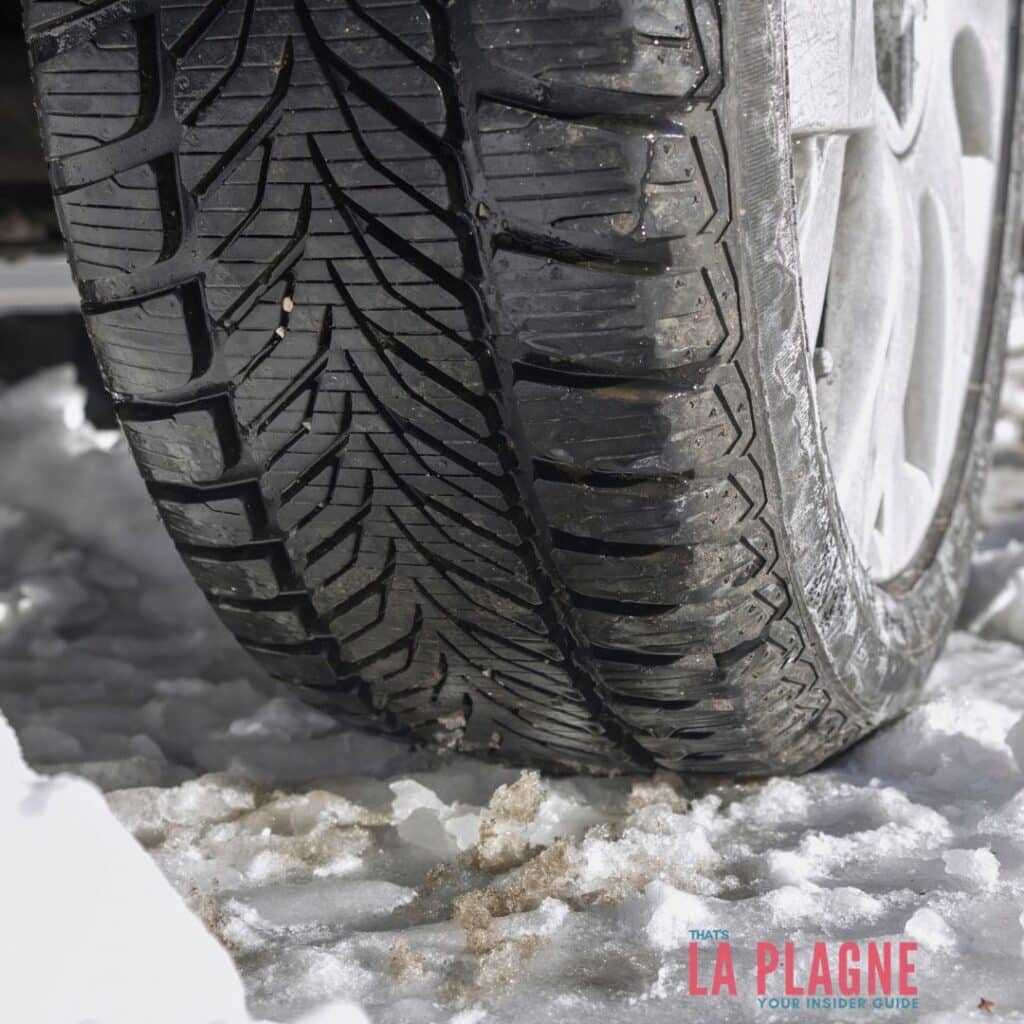
As we gear up for another exciting ski season in La Plagne, let's dive into a topic that's crucial for a safe and enjoyable journey to the French Alps – understanding winter tyre requirements. It’s a question I see asked over and over again in Facebook ski groups and online forums: it is necessary to have winter tyres on your car to drive in the French Alps. I’m going to dive into this topic because whether you're driving through a gentle snowfall or navigating icy bends, the right tyres can make all the difference.
Why Winter Tyres are Essential in the Alps
Driving in the Alps during winter is a breathtaking experience, but it comes with its challenges. The roads can be slippery, visibility may be low, and the weather can change rapidly. This is where winter tyres come in – they're specifically designed to handle these conditions. Unlike regular tyres, winter tyres stay soft and provide better traction in cold temperatures, ensuring your vehicle grips the road and you stay in control.
Get all the juiciest inside secrets about La Plagne, direct to your inbox.
La Plagne lift pass sales, accommodation deals & ski school discounts before anyone else knows about them.
Understanding French Winter Driving Regulations
From November 2023, France’s updated regulations make it mandatory for vehicles in certain mountainous areas, including ski resorts like La Plagne, to have winter tyres or snow chains. This regulation applies from November 1st to March 31st and aims to enhance road safety in snowy and icy conditions.
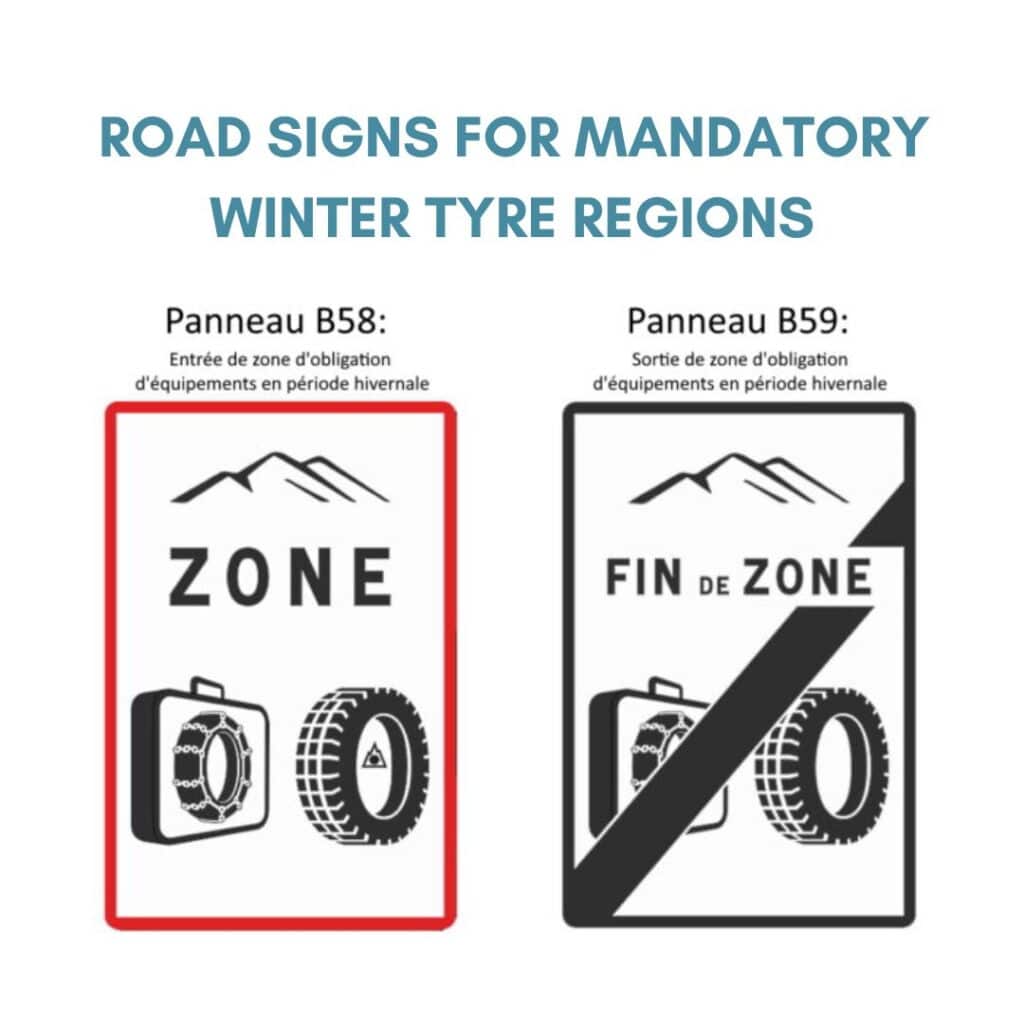
The basic highlights from the French Government are:
- Who's Affected? All four-wheel vehicles, including light vehicles, commercial vehicles, campers, coaches, buses, and heavy goods vehicles.
- Which Areas? 34 departments in mountainous regions (like the Alps, where La Plagne is located) are affected. Specific municipalities within these departments require winter equipment during November 1st to March 31st.
- You’ll see signs like the ones here when you enter and exit regions requiring snow tyres throughout the winter.
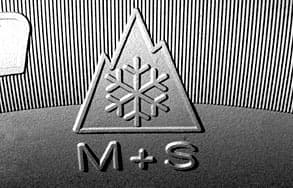
- What's Required? Vehicles must either have metal snow chains or snow socks for at least two driving wheels or be equipped with 4 winter tyres on each axle. Winter tyres marked with “M+S”, “M.S”, “M&S”, or the alpine symbol “3PMSF” are acceptable until November 2024, after which only “3PMSF” marked tyres are recognized. More on this below.
- For Heavy Vehicles: Snow chains are mandatory even if equipped with winter tyres.
The full winter car and snow tyres guidelines can be found on the French Government's site here.
Winter Tyres and Chains: Your Options
There are two main options for complying with these regulations:
- fitting your vehicle with winter tyres or
- carrying snow chains or snow socks
Winter tyres should be marked with “M+S”, “M.S”, “M&S”, or “3PMSF”. After November 2024, only tyres marked with “3PMSF” will be recognised.
This is the first ski season in which enforcement is active rather than a “soft launch.” So don’t assume your usual set‑up is acceptable this year.
Snow chains, meanwhile, should be carried and used when conditions demand, especially on roads covered with compact snow or ice. Remember that snow chains are not a one-size-fits-all thing, but you need to find the model and size that fit your car.
Snow chains or snow socks – which are best?
When choosing between snow chains and snow socks for your vehicle during a ski trip to places like La Plagne, it really depends on your specific needs and conditions. Snow chains are more durable, better for regular use and provide better traction on ice and hard-packed snow, making them a reliable choice for harsher conditions. They are, however, heavier and require more effort to put on your car.
Snow socks, on the other hand, are lighter and easier to fit but offer slightly less traction. They are a good option for occasional use, in lighter snow conditions and for drivers who may find chains too cumbersome to install.
As a local, I would always recommend snow chains over snow socks. However, it's always a good idea to check the local regulations and weather forecasts to make the best choice for your journey. Remember, safety and compliance with local laws should be your top priorities.
Preparing your vehicle for ski resort driving
Preparing your vehicle for the winter conditions in La Plagne, or any ski resort, is not just about compliance; it’s about ensuring your family’s safety and comfort. Check your tyres for the correct markings and ensure they are in good condition. If you’re using snow chains, practice fitting them before your trip – you don’t want your first time to be in the cold and snow! And think about getting snow tyres on your car if you can.
What else you legally need in your car in France
France has a few must-have safety items that are legally required for every vehicle – even UK-registered and rental cars:
- High-vis vest – one per person, easily accessible (not in the boot). Bibs must be marked with EC (Euro Compliant) and fluorescent. You must put it on before exiting the car if you have an issue.
- Warning triangle – used in case of breakdown. The triangle must have an E 27 R marking and be stored in your car.
- Spare bulbs – a full set for your car’s lights is recommended, not enforced. But you can be fined up to 450€ for defective lights.
- Headlamp beam deflectors – for UK cars, so your lights don’t dazzle
- UK sticker – or UK registration identifier on your number plate
- Insurance + registration documents – always carry originals and have a copy of your driving licence with you whenever driving.
- Breathalyser – technically still recommended, but no longer enforced or fined if missing
Police can stop and check this. If you’re missing anything, you could be fined on the spot. And there are separate fines of up to 750€ per item, although the typical flat rate fine is 135€.
Do I need a Crit’Air sticker when driving in France?
If you’re driving through France to reach the Alps this winter, you might need to display a Crit’Air sticker on your windscreen – depending on your route and your car.
The Crit’Air sticker (Certificat qualité de l’air) is part of France’s low-emissions zone policy. It classifies vehicles based on how polluting they are – from electric cars (Crit’Air 0) down to older diesel vehicles (Crit’Air 5).
When and where is it required?
Crit’Air stickers are compulsory if you’re driving through or into certain cities and towns that have either:
- Permanent low-emission zones (ZFE-m) – like Paris, Lyon, and Grenoble
- Temporary pollution control zones – activated during high pollution periods (often in winter)
For families driving to a ski resort, the most common places you might encounter this are Grenoble or Chambéry, particularly if you're using them as overnight stopovers or if pollution levels spike.
If you're passing through a zone without a valid sticker, or your vehicle doesn’t meet the criteria for entry, you risk a €68 fine.
Do UK cars need a Crit’Air sticker?
Yes – UK-registered vehicles are not exempt. You’ll need to apply in advance via the official French government site.
The application is straightforward, but you’ll need to upload your V5C (logbook) to confirm your vehicle’s emissions.
- Cost: Around €4.61 including postage
- Delivery: Allow 2–3 weeks for it to arrive
- Validity: The sticker lasts for the life of the vehicle (unless your emissions rating changes)
Do I need it to drive to resort?
You probably won’t need a Crit’Air sticker in the resort itself — La Plagne and other ski resorts aren’t part of the Crit’Air zone network. But if you’re stopping in Grenoble, Lyon, Chambéry or any large town en route, you could be affected. Especially during pollution alerts, which are more common in winter than most people think.
My advice?
Even if you’re only driving through for a few hours, it’s worth ordering one. It’s cheap, lasts forever, and avoids the risk of a fine or hassle. It's one of those small, annoying admin jobs – but one that’s easy to tick off early in your planning.
Entry-Exit-Strategy (EES): What does it mean driving to your ski holiday?
As part of broader EU vehicle and travel compliance, the European Electronic System (EES) rules now apply when driving in France and other EU countries. Meaning UK‑registered (or non‑French registered) vehicles should ensure their registration and cross‑border travel documentation is correctly logged.
You can read my full article on the EES rules here.
Renting a car for the Alps? What to expect
When renting a car for your ski trip from airports servicing the Alps, like Geneva, Lyon, or Grenoble, it's essential to ensure your rental is winter-ready. Most car rental agencies in these regions include winter tyres and/or snow chains as standard during the winter months. However, policies can vary, so it's always wise to confirm at the time of booking. Don't hesitate to ask the rental agency for specifics about their winter equipment to ensure a worry-free drive to the slopes.
Consequences of non-compliance
Ignoring these tyre regulations can lead to more than just a fine; it compromises your safety and that of others on the road. Unprepared vehicles can easily lose control in snowy conditions, leading to accidents.
Top tips: winter snow tyres & safe winter journeys
Being prepared with the right winter tyres or chains is key to a safe and enjoyable ski holiday in La Plagne. With the right equipment and knowledge, you’re all set for a fantastic winter adventure. Remember:
- Check your tyres before you leave the UK or at a local garage
- Practice fitting your chains at home — don’t wait until the side of a cold mountain road
- Keep gloves, a torch, and a mat or towel handy in the boot
- Lower your speed in icy conditions and allow more braking distance
- Avoid sudden acceleration or braking — smooth driving helps maintain traction
- Check local forecasts and mountain pass conditions before you drive up
See you on the slopes!
FAQs: Driving to the French Alps – winter tyres, chains & new rules
Do I need winter tyres to drive to the French Alps?
Yes — if you’re driving to a ski resort in France between 1 November and 31 March, your vehicle must be equipped with either:
Four winter tyres, or Snow chains or snow socks (at least for the two drive wheels)
This applies in designated mountain areas, including all ski resorts in the Alps, Pyrenees, and other mountainous regions. The requirement is clearly signposted with road signs at entry points to these zones.
What markings should winter tyres have?
To count as a winter tyre under French law, your tyres must be marked with:
“M+S”, “M.S”, or “M&S” (valid until 1 November 2024)
Or, preferably, the 3PMSF symbol (Three Peak Mountain Snowflake), which will be the only accepted marking from 1 November 2024 onwards
So if you’re buying or hiring a vehicle this season, it’s safest to choose tyres with the 3PMSF marking to be compliant now and in the future.
What’s changing this winter?
This is the first winter where the winter tyre rules are being fully enforced. In previous years, there was more of a grace period or “soft launch,” But from now on, you can be fined (around €135) and potentially have your vehicle stopped or turned around if you don’t have the correct tyres or snow equipment.
What are the EES rules and do they affect driving in France?
Yes, they do. The European Entry/Exit System (EES) is a new EU regulation for monitoring travel across borders. It applies to UK travellers, including those driving into France.
If you’re entering France in a UK-registered vehicle, you’ll need to ensure:
Your vehicle is correctly registered
Your travel documents are valid and match your vehicle usage
I've written a more in-depth guide explaining the EES rules, what to expect at the border, and how to prepare. [Read it here – INSERT LINK]
Do the rules apply to hire cars?
Yes. If you’re hiring a car in France (or elsewhere in Europe), it’s your responsibility to check that:
The vehicle has legal winter tyres with the correct markings
Chains or snow socks are provided if needed
The vehicle is authorised for cross-border use (if relevant)
Even if you’ve booked through a UK site, the rules still apply — so always double-check your booking or contact the hire company directly.
Can I use snow socks instead of chains?
Snow socks are allowed as an alternative in many cases, but chains may still be required if you come across signage saying “chaînes à neige obligatoires” (chains compulsory).
Some ski resorts or mountain passes can legally require chains in severe weather — and socks won’t be accepted. I always recommend carrying chains as a backup if your route includes high mountain roads.
Are all-season tyres OK?
Not always. Some all-season (or 4-season) tyres carry the 3PMSF symbol and are accepted. Others do not.
You must check the sidewall of the tyre to see if it has the correct marking. If it only has “M+S” and not “3PMSF”, it will not be accepted after November 2024, and some areas may already be enforcing this stricter standard.
What if I get stopped by police?
If you’re stopped in a mountain zone during the regulated period, the police will check:
Your tyres for the correct marking
That you have chains/socks in the car (if not on winter tyres)
If you don’t comply, you risk:
A fine of €135
Possible immobilisation of your vehicle
Delays or being prevented from continuing your journey
It’s also worth noting that non-compliance could affect your insurance if you're involved in an accident.
Do these rules apply to UK-registered cars?
Yes. If you’re bringing your car from the UK into France, you must comply with the same winter equipment rules when you enter a mountain zone.
The signage will be in place, and it doesn’t matter what tyres are legal in the UK — you’ll need winter tyres or snow chains to drive legally in the Alps.
What are the best snow chains or socks to buy?
There’s no single answer, but here’s what to consider:
Snow socks are easier to fit but wear out faster
Chains are tougher and better in deep snow or ice
Always check your vehicle manual to ensure there’s enough clearance for chains — especially for larger cars or electric vehicles
Look for TÜV-certified products that are tested for winter conditions
If in doubt, I recommend buying both or at least travelling with chains in your boot, even if you’re on winter tyres.
What’s the difference between 3PMSF and M+S tyres?
M+S (Mud and Snow) tyres are not performance-tested for snow but have deeper tread
3PMSF (Three Peak Mountain Snowflake) tyres are tested for snow performance and are the only tyres that will be legally accepted from November 2024
Look for the mountain-and-snowflake icon on your tyres to be certain.
Do electric or hybrid vehicles need special tyres or chains?
Yes — many electric and hybrid vehicles are heavier and may have limited clearance in the wheel arches, making it harder to fit chains.
Check your vehicle manual for compatible chain types
Consider buying low-clearance chains or specialist snow socks
Always test-fit them before you travel
Where can I find a list or map of affected areas?
You can view a full list of the 48 mountain departments where these rules apply on the official French government site here.
Signs will also mark the start and end of the regulated zones — look out for blue signs with a mountain logo and chain/tyre symbols.
