That's La Plagne contains affiliate links and is a member of the Amazon affiliate program. If you make a purchase using one of these links, I may receive a small commission - at no extra cost to you. I never recommend anything I haven't experienced myself, and the commission helps me keep this site running at full speed! See my Disclosure Policy for extra information.
Driving to La Plagne with kids: the complete self-drive guide

Driving to La Plagne at a glance
We’ve driven between the UK and La Plagne more times than I can count, first for ski seasons and now with our three kids in the back. So I’ve put everything in the order you’ll need it: crossing the Channel, the route, tolls, winter tyres, charging an electric car, arriving, parking and the big food shop.
- Distance: Calais to La Plagne is roughly 950 km, around 9 to 10 hours of driving without stops.
- Route: French motorways past Reims and Dijon, then Annecy or Chambéry, Albertville and up the Tarentaise valley.
- Tolls: most of the motorway is tolled, and a toll tag makes life much easier.
- Winter tyres or chains: a legal must in Savoie from 1 November to 31 March.
- Best day to arrive: anything but Saturday.
- Electric car? There are chargers in the resort and in the valley below.
Is driving to La Plagne worth it?
For us, yes. You can fill the car with everything you need (no luggage limits, no ski bag fees), set off when it suits you and skip the airport queues and transfer coaches. You also have the car in resort for supermarket runs and days out in the valley.
The downsides? It’s a long day (or night) behind the wheel, the tolls and fuel add up, parking in resort isn’t cheap, and you need to be ready for snow on the last stretch up the mountain. If that sounds manageable, read on.
TOP TIP: All that extra space is a blessing and a curse. Pack everything you think you need, then halve it. You’ll live in your ski gear all week anyway. My family ski holiday packing tips will help you get it right.
Crossing the Channel: Eurotunnel or ferry?
Ask locals, family and seasonnaires and the answer is pretty much unanimous: take the Eurotunnel (LeShuttle). It’s usually cheaper, the crossing only takes about 35 minutes, there are plenty of departures, and you stay in the car with the kids the whole way. The only complaint you’ll get is from the kids, who’ll be gutted they can’t see the sea or any fish out of the window!
TOP TIP: Look into Tesco Clubcard vouchers. Eurotunnel has been a Clubcard reward partner for years, and the vouchers have often covered most of our crossing. Check the current rate on the Clubcard website before you book.
We always book a late-night crossing. Off-peak tickets are cheaper and the kids are asleep before you’ve left Calais. More on night driving below.
The route from Calais to La Plagne
From Calais it’s roughly 950 km to La Plagne, and around 9 to 10 hours of driving if the roads are clear. Most people head down the motorway past Reims and Dijon, then on towards Annecy or Chambéry and into the Tarentaise valley at Albertville. From there, the N90 takes you past Moûtiers to Aime, and the last stretch is the winding road up the mountain to the resort.
If you’re staying in Montchavin-Les Coches, Montalbert or Champagny, your turning comes earlier or later in the valley, so put your accommodation into the sat nav rather than just “La Plagne”.
Plan your stops before you set off, and don’t rely only on your phone. Signal can drop in the mountains, so download offline maps or keep a paper map in the glovebox. My boys love following our progress on the map, and it keeps them quiet for ages.
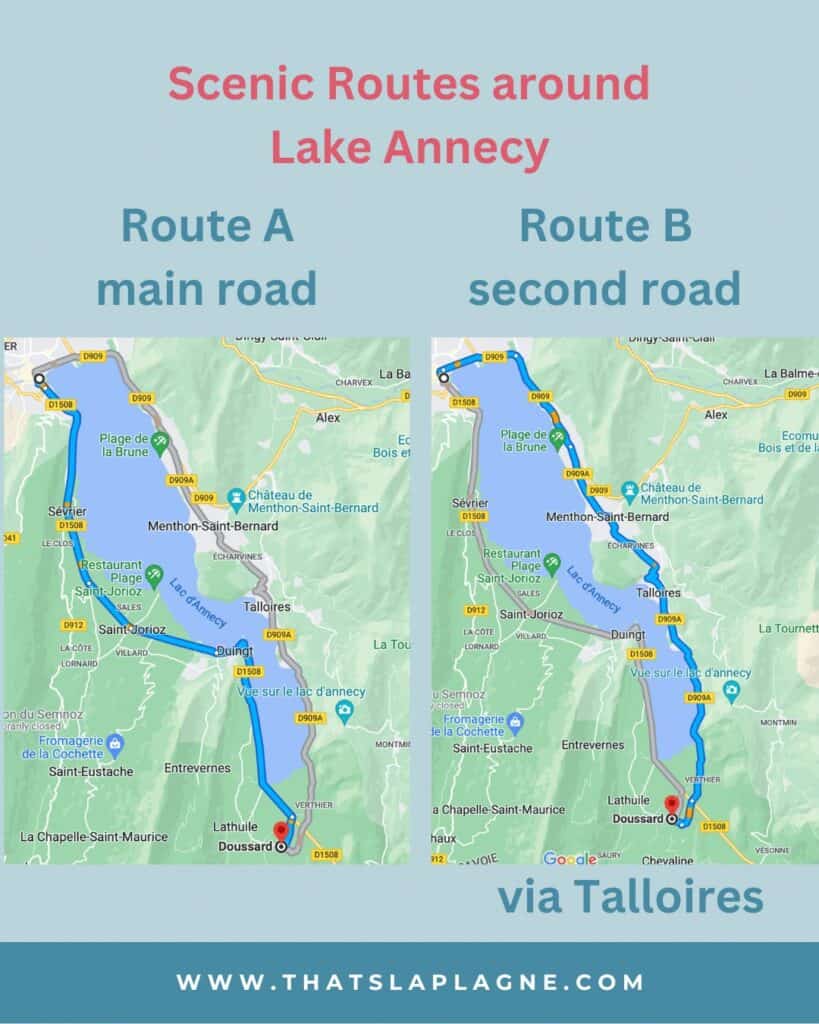
Fancy the scenic route? Stay on the motorway as far as Annecy, then come off and follow the road along Lake Annecy. For an even prettier drive, take the road round the far side of the lake through Talloires. Both are stunning, but you do risk hitting traffic.
Toll roads and toll tags
Most of the motorway between Calais and the Alps is tolled. Out of curiosity, we once avoided the toll roads to see what the difference was. We saved roughly €150 to €200 on the return trip, but it added 4 to 5 hours each way, plus almost an extra tank of fuel. We haven’t done it since!
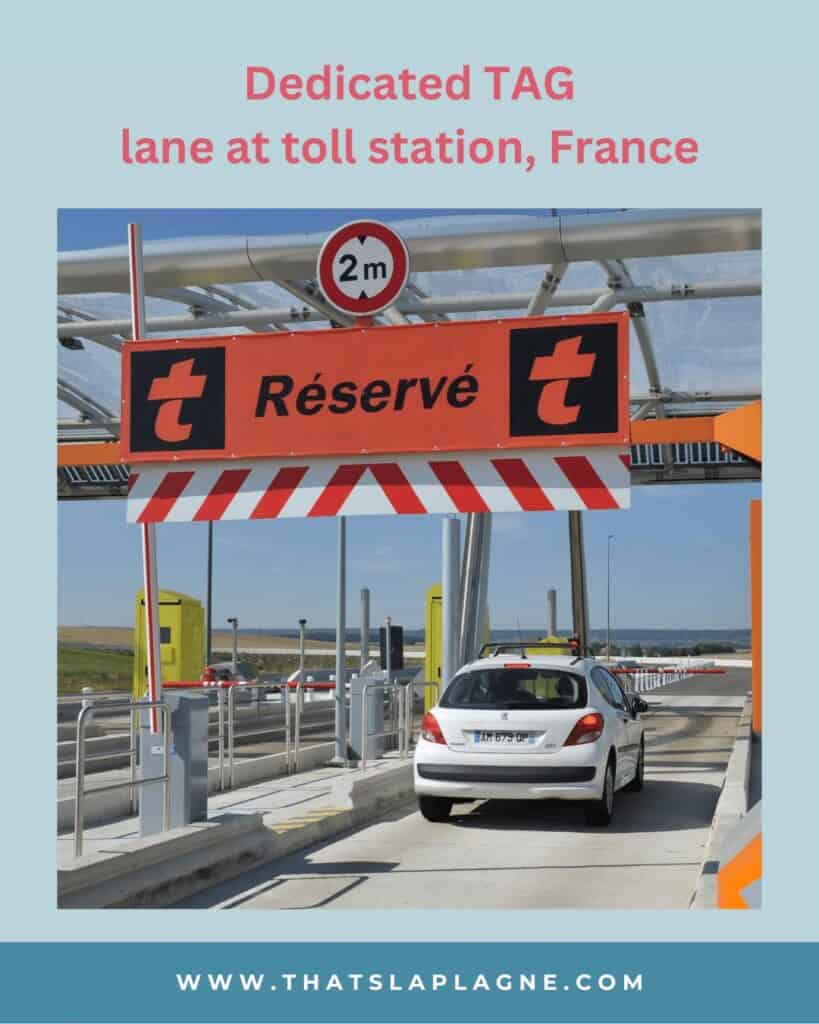
If you’re in a right-hand-drive car, the tolls are the fiddly bit: your passenger has to reach out for every ticket and payment, which is no fun when they’re trying to sleep on a night drive. The answer is a toll tag (a télépéage badge). It beeps as you drive through, you use the dedicated tag lanes and skip the queues at the booths, and the total comes out of your account each month.
Driving from the UK: you can order a Liber-t tag for France through Emovis Tag. It’s paid by Direct Debit from a UK bank account, and free Royal Mail delivery takes 3 to 7 working days, so order it a couple of weeks before you go. Check their site for the current fees.
Living in France (like us): Bip&Go’s pay-as-you-go tag costs €2.10 for each month you use it and nothing in the months you don’t (prices from 1 June 2026). Watch out for the €15 fee if you go 14 months without using it. Plus, of course, the tolls themselves.
When to drive: avoid Saturdays
Saturday is changeover day right across the Alps. In peak weeks, like Christmas, New Year and February half term, the hour from Moûtiers up to La Plagne can take over 5 hours. And that’s without any snow.
If you can, book your accommodation Sunday to Sunday. If you’re stuck with Saturday to Saturday, book a night in the valley at either end. Aime is only 30 minutes below the resort. BONUS TIP: Saturday is by far the quietest day on the slopes, while everyone else is in transit. So an extra Saturday in resort means near-empty pistes.
Should you drive through the night?
Opinions are split on the forums, but we always drive through the night. We book a crossing around midnight, arrive in Calais about 1am and drive while the kids sleep. Here’s why it works for us:
- Off-peak crossings are cheaper
- The French motorways are empty
- The kids sleep in their car seats, so fewer meltdowns
- No hotel to pay for on the way
- We reach Albertville around 7.30am, perfect for breakfast and the supermarket
- We arrive ahead of the crowds, which really matters on Saturdays
Only do it if you’re comfortable driving in the dark on French roads, and remember the weather can turn as you get close to the mountains.
Winter tyres, snow chains and what you need in the car
Winter tyres or chains are the law in the mountains. From 1 November to 31 March, in 34 French mountain departments (Savoie included), you need four winter tyres with the 3PMSF snowflake mark, or chains or snow socks in the car. My winter tyres guide explains the rules in full, including hire cars, Crit’Air stickers and everything else you legally need to carry. An all-in-one French driving kit covers the legal must-haves.
I’d always take snow chains over cheaper snow socks. Socks are quicker to fit, but they don’t grip anywhere near as well.
- Check the size on your tyre wall before you buy, so your chains fit
- Practise fitting them at home. The first time shouldn’t be in the dark on a snowy hairpin bend!
- Let them dry out completely before you pack them away, or they’ll rust
Keep waterproof gloves, a head torch and a kneeling mat with your chains. You will need them!
Top up your screenwash with one rated to at least -20°C, like this screenwash rated to -24°C. The mountain roads are filthy and you’ll use loads. WARNING! Some antifreeze screenwashes smell strongly of alcohol. Avoid them if you can, unless you want your car to smell like a round of tequila slammers all week.
Get the car serviced before you go. Halfway through France is not the moment to find out your oil is low or your brakes are worn. I’ve had friends with both problems on the way to a ski holiday, so don’t be the cautionary tale!
While you’re at it, pack an ice scraper, a jump starter and a winter car emergency kit. I’ve put everything I’d take in one list.
Planning a family ski holiday?
Get my free Ski Holiday Planning Pack: the Ski Holiday Reset Planner, the Ski Lessons & Ski Hire Guide, the Accommodation Guide and the Transfer Guide, written by a local mum of three to help you plan your La Plagne trip.
Driving an electric car to La Plagne
More and more of you are asking me about driving an electric car to the Alps. It’s very doable with a bit of planning, and here’s what you need to know.
Charging on the way
Most French motorway service areas (aires) now have rapid chargers, so you can charge while everyone has a loo stop and a stretch. Plan your stops with an app like Chargemap, PlugShare or A Better Routeplanner, and expect to stop more often than you would in summer, because the cold cuts your range.
Where to charge in La Plagne
There are public charging points in several of the La Plagne villages:
- Plagne Centre: the covered Boulevard car park
- Plagne Soleil: the covered car park
- Plagne 1800: Les Mines car park at the entrance to the village (rapid charger)
- Plagne Bellecôte: at the entrance to the resort
- Aime 2000: the car park at the resort entrance
- Montchavin: Route du Replat, by the cinema car park (rapid chargers)
The TotalEnergies chargers at Plagne 1800 and Montchavin are pay as you go. You can pay by bank card or with the QR code on the screen, and there’s no subscription. Prices change, so check the rate on the screen before you plug in. There’s more on each village’s car parks in my La Plagne parking guide.
Charging in the valley
- Aime: 16 Tesla charging points in the E.Leclerc car park, handy if you’re doing your food shop there. Check the Tesla app to see whether they’re open to other makes of car.
- Mâcot-la-Plagne: a rapid charger by the town hall (mairie)
- Bellentre: rapid and standard chargers in the car park by the village shop and library, on the way up to Montchavin-Les Coches
My EV tips for the mountains
- Ask about charging when you book your accommodation. Some hotels and chalets have their own chargers for guests, including Hotel Carlina and some of the Alpoholics chalets.
- Charge up in the valley before the climb, in case the resort chargers are in use when you arrive.
- Preheat the car while it’s still plugged in, to save battery on cold mornings.
- The drive back down the mountain puts some charge back through regenerative braking, so you don’t need a full battery to set off home.
- The winter tyre and chain rules apply to electric cars too.
Should you hire a car instead?
If you’re flying, or your own car isn’t up to the trip, hiring a car in France can be a great option. A hire car should come kitted out for the local rules, which takes away a lot of the stress, especially with children. And you still get the freedom to travel at your own pace.
I’ve even had friends where it worked out cheaper to hire a car than to service their own, buy winter tyres and bump up their insurance! So it’s worth comparing.
TOP TIP: Check out DiscoverCars.com to compare prices across loads of rental companies, including small local ones you might never have heard of. I’d always check directly with the supplier too, but I’ve yet to find a car cheaper elsewhere.
The journey with kids: snacks, screens and stops
Hungry, bored kids can turn a road trip into a nightmare, so this bit matters! We give each child their own snack box, so they can help themselves and know that when it’s gone, it’s gone. We also take a couple of big refillable water bottles to top up everyone’s bottles on the way.
For entertainment, we pack books, colouring, puzzle books and small toys, and good old I spy still goes on for hours. Each child has an iPad with episodes downloaded before we leave, and we try to steer them towards a longer film to fill the time. Audiobooks and podcasts are great if you want a break from screens. Our favourite trick: the kids pack their own small activity rucksack. If they can pack it and carry it, it can come. Here are more ideas on how to entertain your kids on long journeys, plus my kids’ road trip entertainment list.
Plan regular breaks to stretch, run around and use the loo. French motorways have aires every so often, with toilets and often a play area. Don’t rely on service station food, though. In France you’re more likely to find a ham and butter baguette than a meal deal, and veggie or vegan options are hard to come by, so pack accordingly.
And keep a few surprises up your sleeve: a secret snack or a small new toy works wonders when you’re stuck in traffic.
Our “oh crap!” bag
With kids, expect the unexpected, from traffic jams to car sickness. Keep a grab bag within arm’s reach so you can lay your hands on the essentials straight away. Ours usually has:
- First aid: plasters, antiseptic wipes, small scissors, paracetamol and Calpol sachets
- Clean-ups: wet wipes, nappy bags, small bin bags, hand sanitiser and spare toilet roll
- Spare clothes: a full change for each child, packed as outfits, plus a top for you (trust me)
- Baby and toddler: nappies, spare comforters and dummies, formula, bottles and a flask of warm water
- Grown-up admin: car and travel insurance documents, any prescription medication, your booking details, phone chargers and a power bank
Arriving in La Plagne: check-in, luggage and lift passes
Driving means you can arrive earlier in the day, which gives you time to sort ski hire, lift passes and food before everyone’s exhausted.
TOP TIP: Book your ski hire before you go. My ski hire partner Alpy has shops in almost every La Plagne village, with up to 65% off in-store prices online, plus an extra 5% with my code THATSLAPLAGNE. Collect your kit from 4pm the day before your hire starts.
TOP TIP: If you arrive early, you get a free half-day ski pass on your arrival day in La Plagne. A bonus of driving, and a chance to loosen up those ski legs!
Do bear in mind that most accommodation won’t let you check in until 4pm at the earliest. It’s always worth asking about an early check-in or dropping off your bags and skis. Otherwise, head out for lunch and enjoy your surroundings. Luggage storage in La Plagne is very limited, so speak to your accommodation provider if you need somewhere to leave your bags.
Buy your lift passes online before you arrive. The queues at the ticket offices can be huge at peak times, and you don’t want a delayed drive eating into your first morning on the slopes. If you have La Plagne passes from last year, keep them and recharge them online. Otherwise, you can order new passes online and collect them from a lift pass office in your village. Here’s how to choose the right lift passes for your family.
Parking in La Plagne
Parking is one of the trickiest parts of driving to La Plagne. New accommodation has eaten up a lot of the old free spaces, and paid parking costs more than most people expect. Here’s what to do, in order:
- Ask your accommodation provider. Even if it isn’t advertised, landlords often have private spaces they rent out by the week.
- Use the free unloading time. In Belle Plagne, for example, you can park in the underground car park for free for up to 1 hour 45 minutes to unpack, and again to pack up at the end of the week.
- Check the free outdoor car parks. Most villages have one, but it might be a walk from your door.
- Book paid parking ahead, especially in peak weeks.
I’ve covered every village in my La Plagne parking guide: free car parks, paid and underground parking, and where to charge an electric car. Coming in a campervan? Here’s everything you need to know about motorhome parking in La Plagne.
Food shopping on the way up
Locals call it the “mountain tax”: everything costs more in resort, from your après-ski beer to the shop at the local Spar. If you’re self-catering, doing a big shop in the valley on the way up will save you a lot, especially when you’re feeding children. Here are the best supermarkets near La Plagne:
- The big hypermarket in Albertville (formerly Géant, now Intermarché), about an hour from La Plagne. The biggest choice in the area, and your best bet for speciality foods, dietary requirements and baby items.
- E.Leclerc in Aime, 30 minutes from Plagne Centre. A good supermarket, though the choice can be limited on busy weekends. It also has EV charging in the car park.
- Super U in Bourg-Saint-Maurice, 45 minutes from La Plagne. It means driving past the turning for La Plagne, but hear me out: they do click and collect, which is brilliant with small children you don’t want to drag round a supermarket. The pick-up point isn’t at the main store but about 1 km further along the main road, near the big Weldom shop, on your left.
Got allergies or dietary needs in the family? Here’s what you can find in La Plagne in my guide to ski holidays with dietary requirements, from gluten-free to dairy-free.
You can also order Huski food delivery. Huski cooks and freezes meals and delivers them to your door, ready to go straight in the oven. You can order for the whole week or just a few nights, like your arrival evening, children’s meals or vegan, vegetarian and dairy-free options.
Packing food in the car: what’s allowed (updated 7 November 2026)
If you’re tempted to fill the boot with food from home, check the rules first. Right now you can’t bring meat, cheese, milk or other dairy from the UK into France, and that includes ham sandwiches and the cheese for your first-night pasta. Fresh fruit, veg and plants are restricted too. Dry, shop-bought basics like tea bags, cereal, crisps and squash are generally fine, but check the latest rules before you travel.
A new UK–EU deal looks like it’s going ahead and should relax the rules from around 2028. The final details are due at the UK–EU summit on 20 November 2026, and I’ll update this at the end of November. For now, it’s much easier to stock up in France: here’s my guide to La Plagne supermarkets and food shopping.
Safe travels!
I hope this helps you plan your drive to La Plagne. If there’s anything I’ve missed, pop me a comment here or send me a DM on the That’s La Plagne Instagram account, where I’ll pick it up quicker.
See you on the slopes!
Pin this post to save for later