
That's La Plagne contains affiliate links and is a member of the Amazon affiliate program. If you make a purchase using one of these links, I may receive a small commission - at no extra cost to you. I never recommend anything I haven't experienced myself, and the commission helps me keep this site running at full speed! See my Disclosure Policy for extra information.
A unique Alpine distillery experience near La Plagne
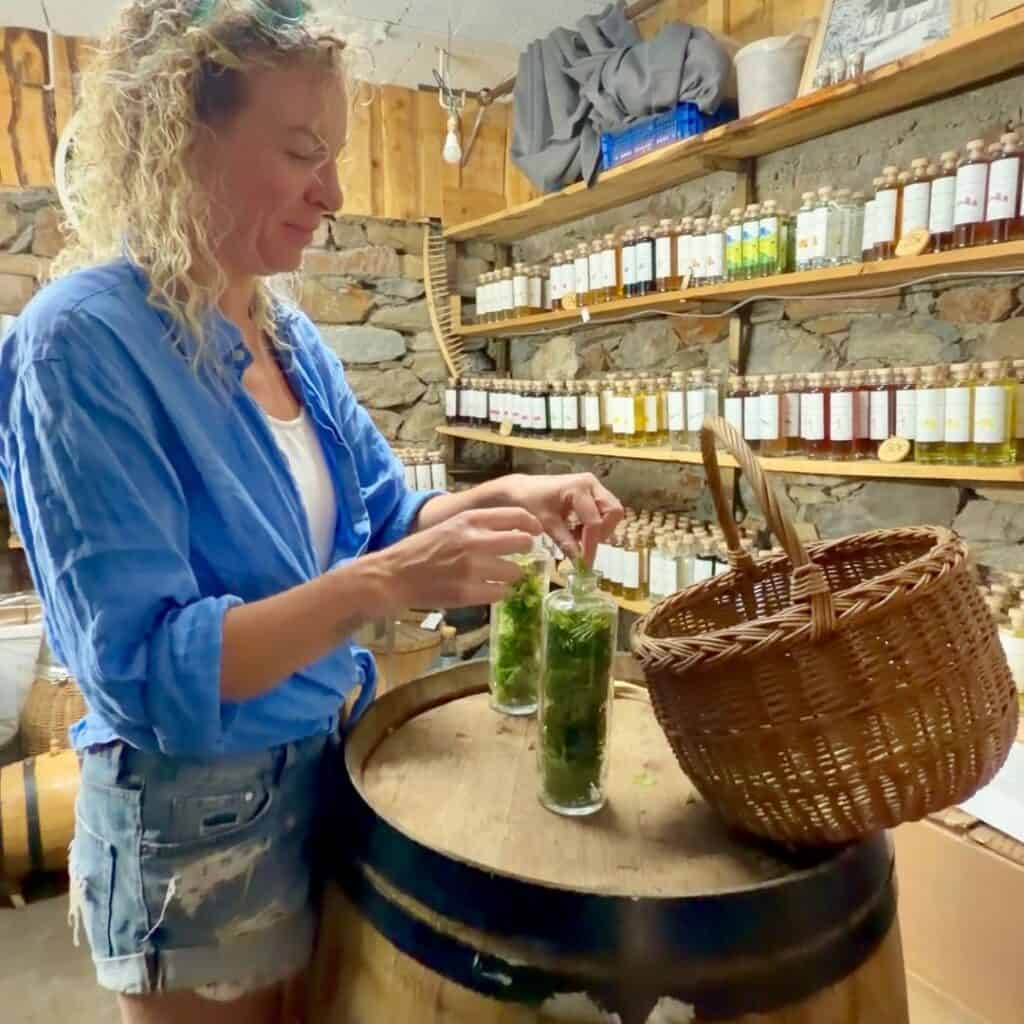
A new summer activity in La Plagne
One of my favourite things about living in the French Alps year-round is discovering experiences that connect visitors with the landscapes around them.
This summer, Distillerie de Chantemouche has launched a unique activity combining mountain foraging, local traditions and liqueur making.
Depending on when you visit, you could find yourself collecting fir buds, elderflowers, acacia blossoms, raspberries, larch buds or other seasonal ingredients before returning to the distillery to transform them into your own Alpine liqueur.
I joined one of the first sessions of the summer, where the ingredient of the day was young fir buds collected above Granier.
What is Distillerie de Chantemouche?
Tucked away just outside the village of Granier, Distillerie de Chantemouche is one of those places you could easily drive past without realising what is being created behind its doors.
Run by Dorian, whose family has lived in Granier for generations, the distillery produces a range of small-batch spirits and liqueurs inspired by the plants, fruits and herbs that grow throughout the surrounding mountains. While the distillery itself has been established for many years, summer 2026 marks the first season that visitors have been invited behind the scenes to experience the process for themselves.
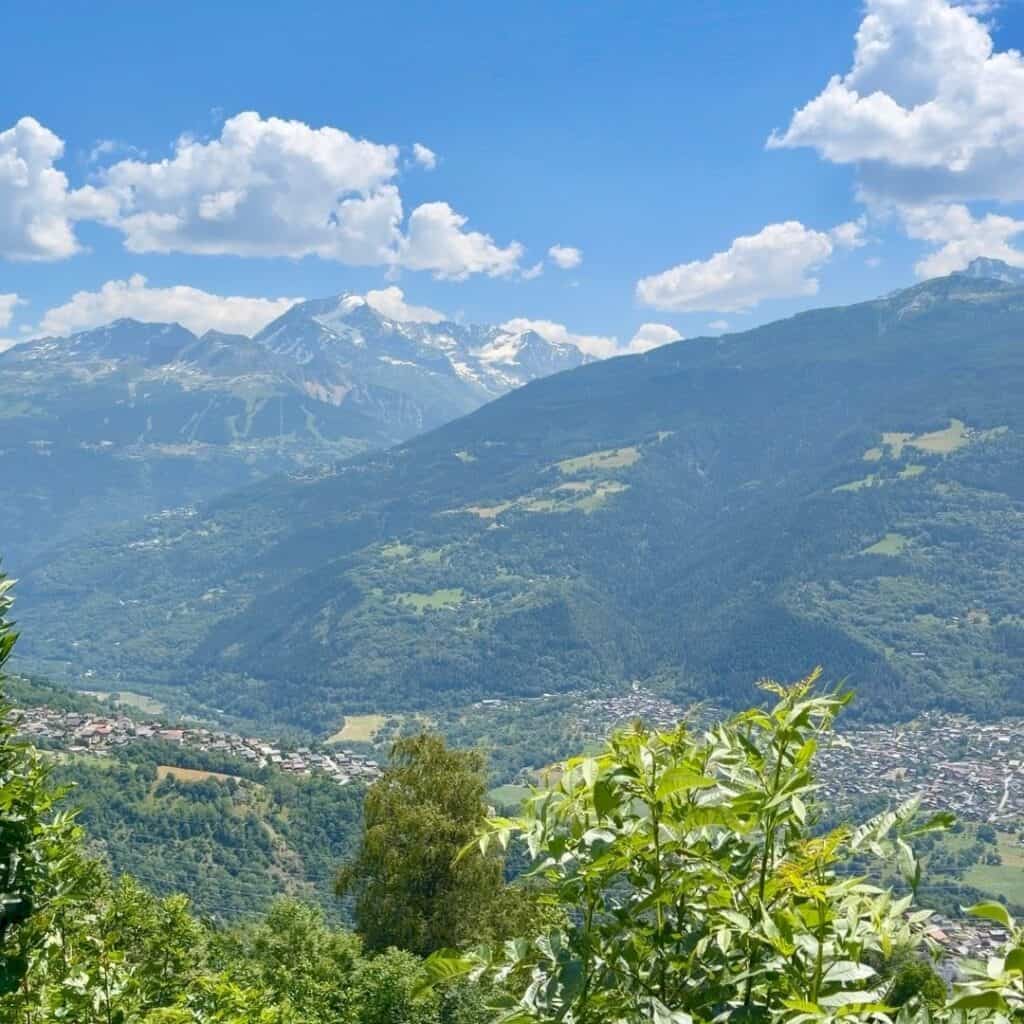
The location couldn't be better suited to the task. Set on the sunny, south-facing slopes above the Tarentaise Valley, the area around Granier enjoys long hours of sunshine and supports an abundance of wild and cultivated ingredients throughout the growing season. Depending on the time of year, this might include elderflower, acacia blossom, fir buds, raspberries, mint, cherries and many other seasonal botanicals that eventually find their way into the distillery's bottles.
This isn't a large commercial producer with separate teams handling different parts of the business. Dorian is involved in every stage of the process, from foraging ingredients and distilling spirits to bottling, labelling and welcoming visitors.
That attention to detail is visible throughout the distillery. The branding feels thoughtful and personal, with beautifully designed bottles, distinctive stoppers and a logo inspired by the mountain skyline visible from the distillery itself. Even the merchandise, from T-shirts to shot glasses, has been created in collaboration with local artists, reinforcing the connection between the distillery and the wider artisan community that calls Granier home.
While the presentation feels modern and creative, the production methods remain firmly rooted in tradition. Visitors get the chance to see how spirits and liqueurs are produced using traditional distillation techniques, offering an insight into a craft that has shaped mountain communities for generations.
And as I quickly discovered, the distillery is only part of the story. Granier itself is home to a growing collection of artisans and producers, making it an increasingly interesting destination for anyone wanting to discover a different side of life in the French Alps.
Top tip: explore Granier's local artisans
One of the things I really liked most about visiting Granier is that the distillery isn't the village's only artisanal producer.
Despite its small size, Granier is home to several passionate local artisans producing everything from spirits and liqueurs to handmade cosmetics and regional specialities. It's exactly the sort of place where you can discover products that you simply won't find in supermarkets or souvenir shops.
I'd recommend allowing a little extra time to explore the area and support some of the other local producers nearby.
You probably won't have time to visit every workshop in a single day, but combining a distillery visit with a stop at a few local producers is a fantastic way to discover a more authentic side of the valley and take home something genuinely local from your holiday.
A good starting point is the Granier Tourist Office, which stocks a selection of locally made products and provides an easy way to discover what's produced in the village and surrounding area.
Among the producers you'll find is Tarentasia, which creates soaps and cosmetics using mare's milk. Their products are made locally and inspired by the natural environment of the Tarentaise Valley.
A distillery experience that changes with the seasons
Unlike many workshops where everyone follows the same recipe week after week, the ingredients used at Distillerie de Chantemouche are dictated by nature. What visitors forage depends entirely on what is growing in the mountains at that particular moment.
When I visited in June, we hopped in the car for 5 mins up to Plan Pichu and headed into the forest above Granier to collect young fir buds. A few weeks earlier, participants had been gathering elderflower, while other sessions throughout the season may focus on acacia blossom, larch buds, hyssop, blueberries, rose hips or other locally available botanicals.
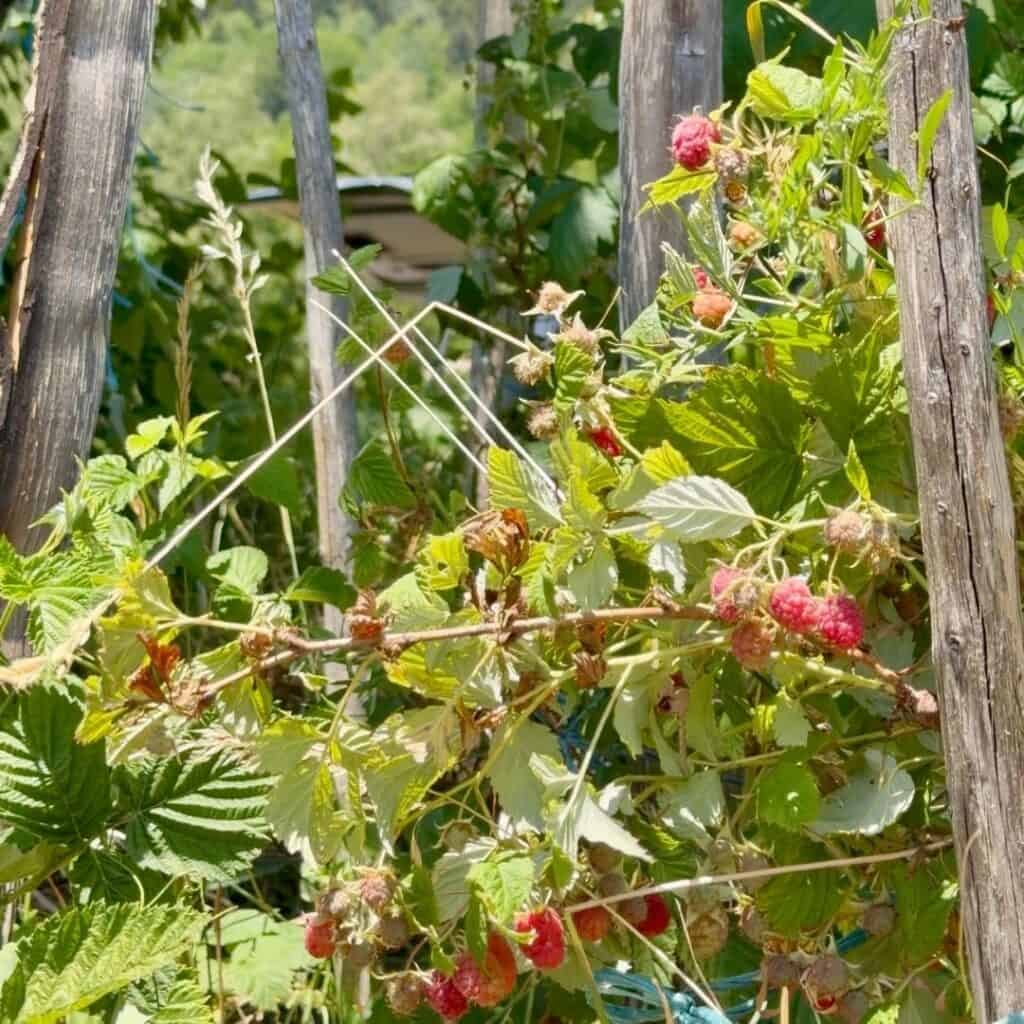
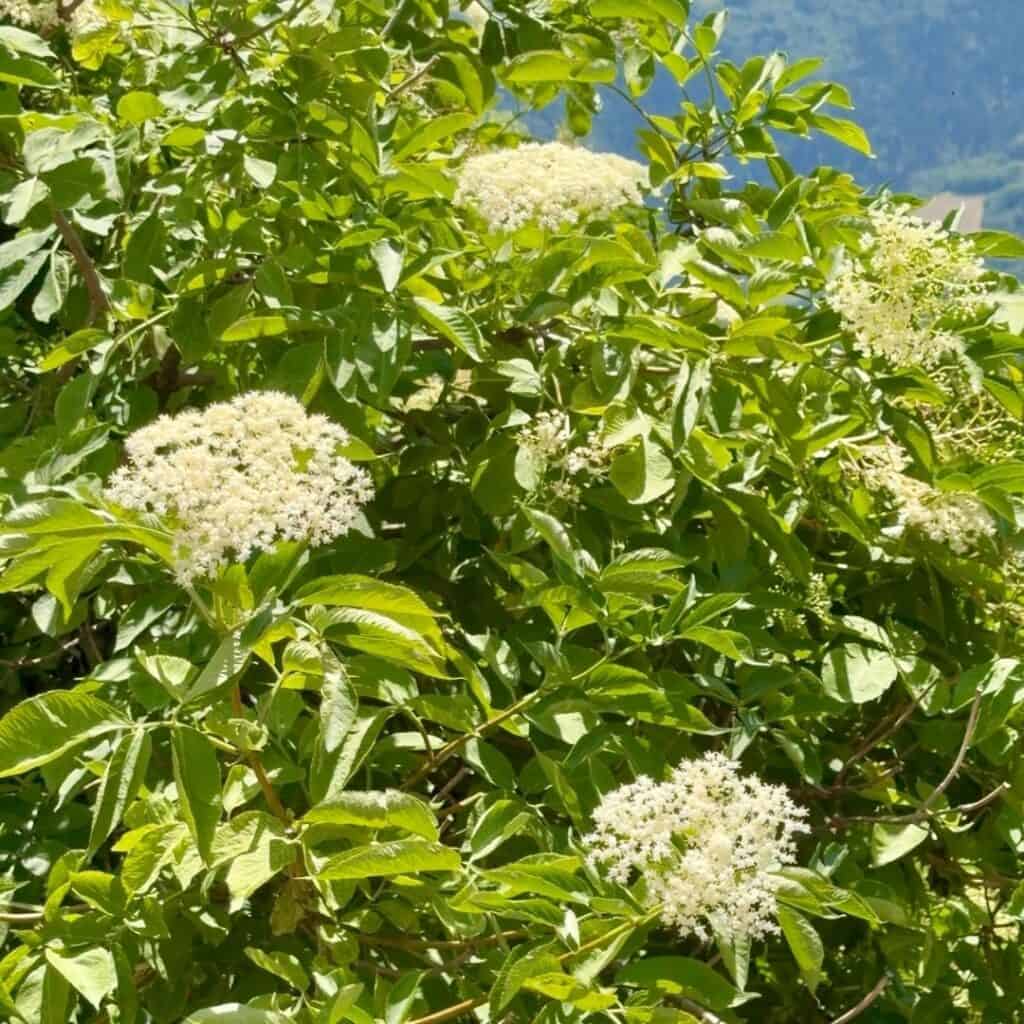
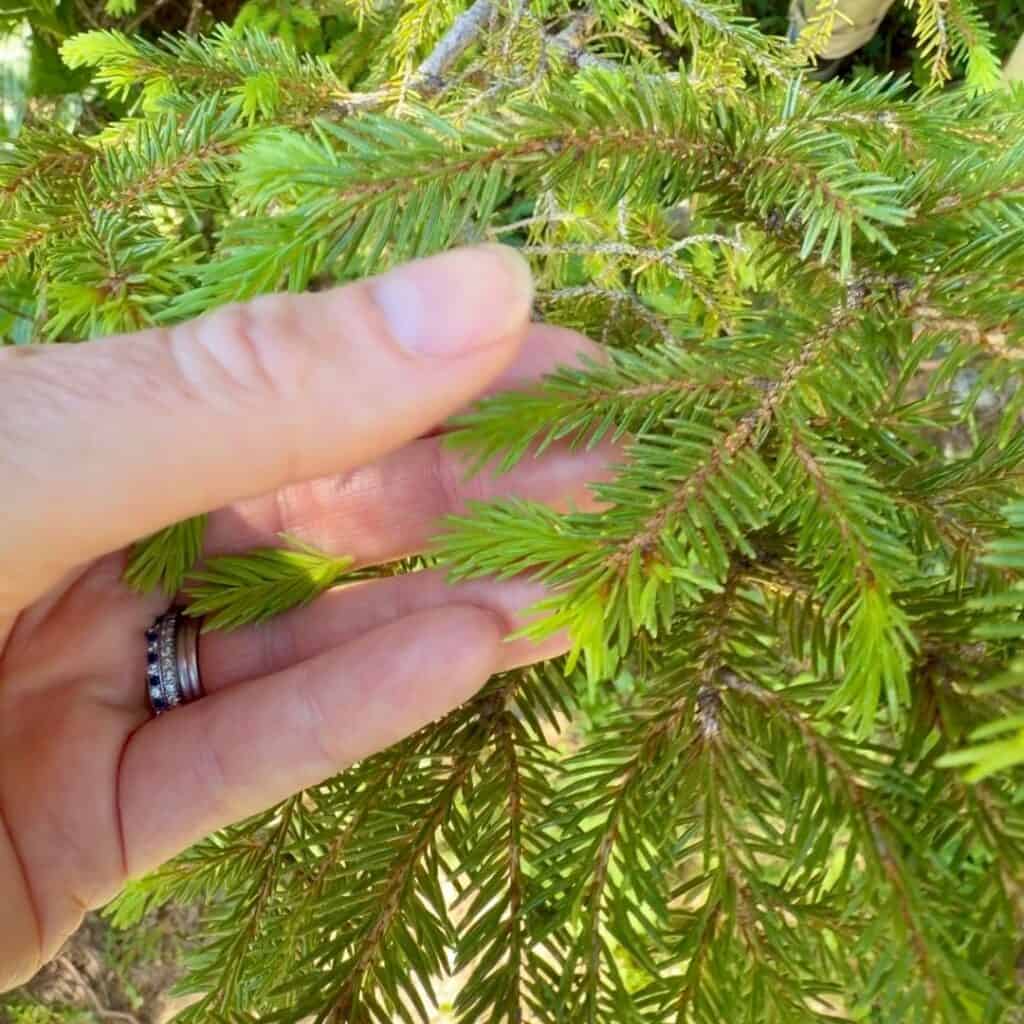
The mountains are constantly changing throughout the summer and this activity evolves alongside them. As one ingredient reaches its peak, another begins to emerge, creating a calendar that follows the rhythms of the natural world rather than a fixed programme.
You're really booking a seasonal foraging experience.
For visitors, this means every workshop offers a slightly different experience. The landscapes, colours, scents and flavours can vary significantly depending on when you visit. An early summer session might focus on fresh blossoms and young growth, while later in the season the emphasis shifts towards fruits, berries and aromatic herbs.
It's also a great way to discover just how much diversity exists in the Alpine environment. Most visitors are familiar with the mountains as a place for hiking and skiing, but few realise how many edible plants, flowers, fruits and herbs grow on these sunny slopes throughout the year.
And perhaps that's what I enjoyed most. The liqueur you create isn't just a souvenir from your holiday; it's a reflection of a specific place and a specific moment in the Alpine summer.
A morning foraging at Plan Pichu
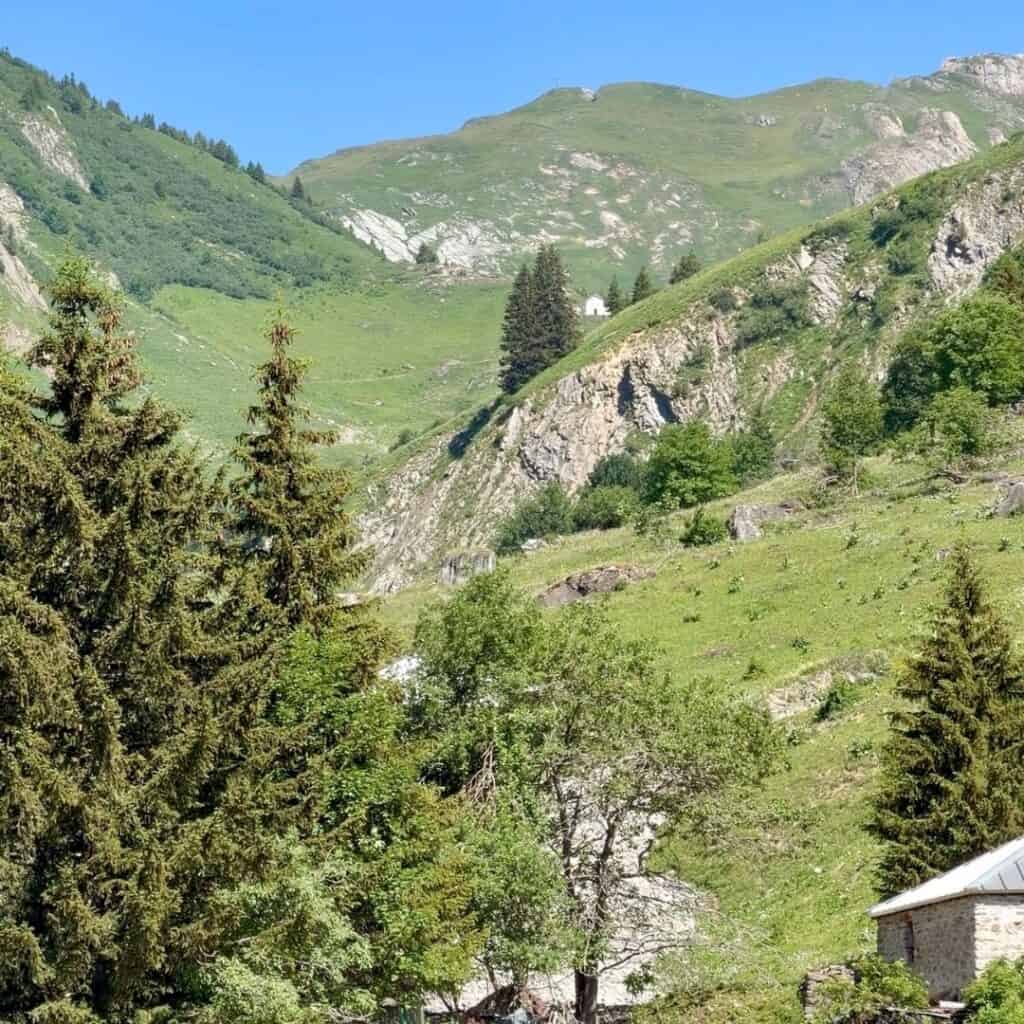
After meeting at the distillery, our small group climbed into cars and headed a few minutes up the mountain to Plan Pichu, a beautiful area above Granier that offers some of the best views in the valley.
If you've never visited before, Plan Pichu is worth knowing about in its own right. There's plenty of parking, access to several walking routes and mountain refuges, and it's also home to the local Beaufort cheese cooperative, where visitors can learn more about the production of one of the Alps' most famous cheeses.
But on this particular morning, we weren't here for the views or the cheese. We were here to forage.
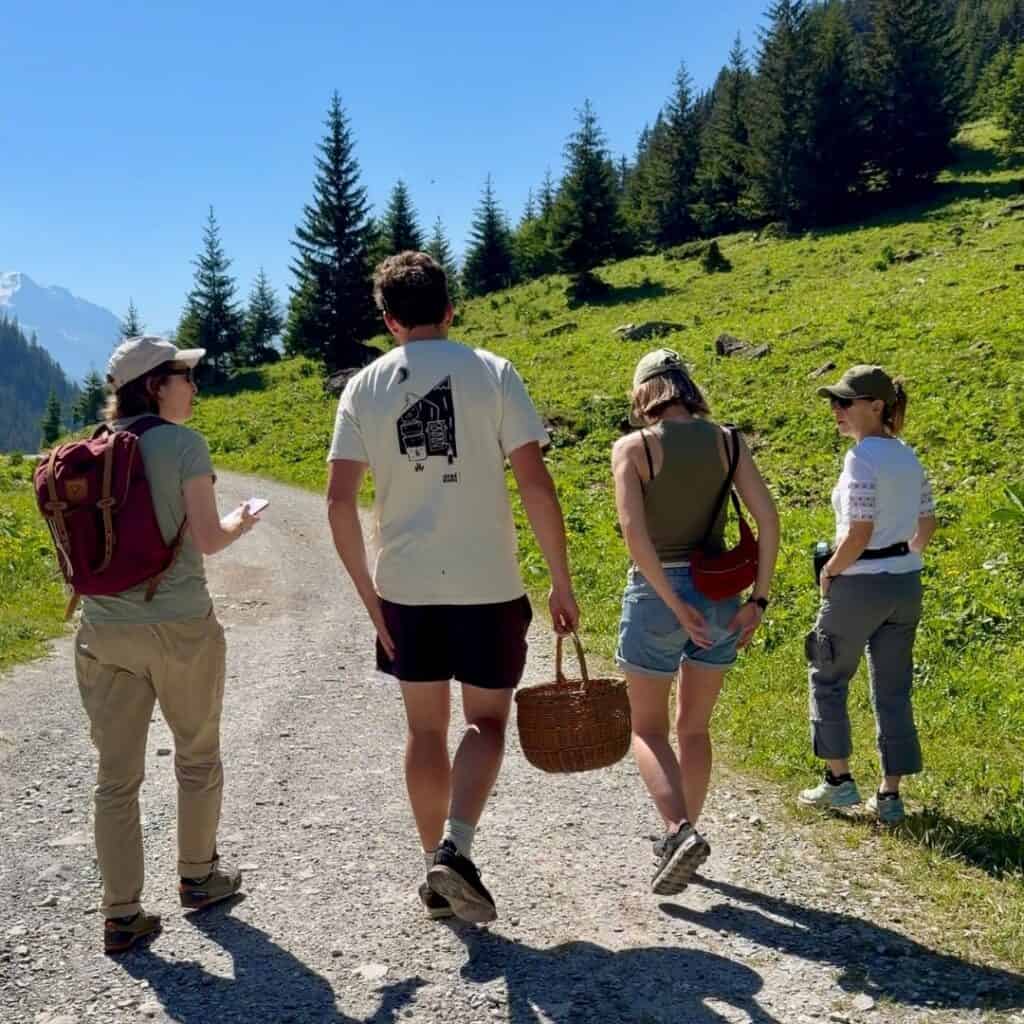
Before we even started collecting ingredients, Dorian spent time introducing us to the surrounding landscape. One of the most interesting parts of the morning was learning just how many useful plants, flowers and trees grow in the area. Even though they weren't currently in season, he pointed out species that would be harvested later in the summer and autumn, helping us understand how the workshops evolve throughout the year.
Our focus for the day was young fir shoots.
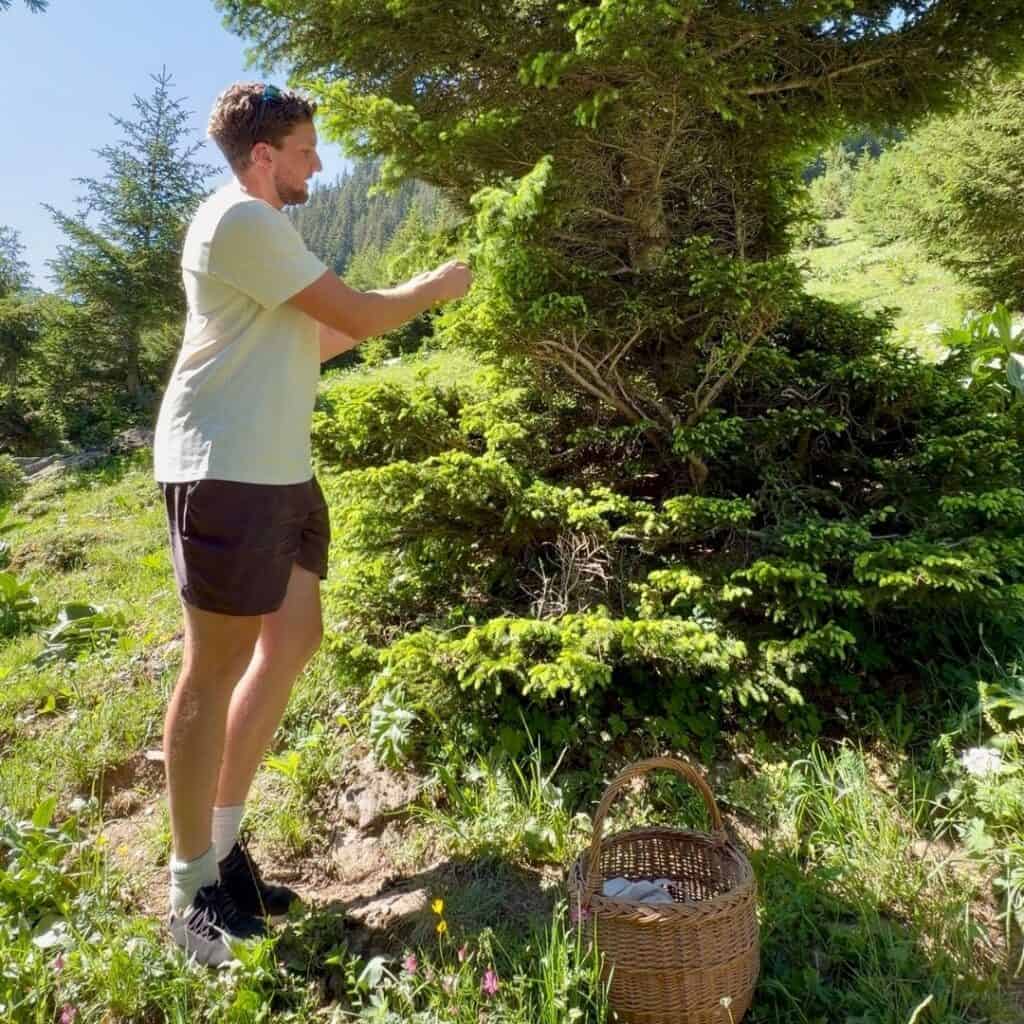
We learned how to identify two different varieties of fir tree before carefully selecting the fresh new growth from each one. Sustainable harvesting is an important part of the process, so rather than stripping a tree, we collected only small amounts from multiple branches.
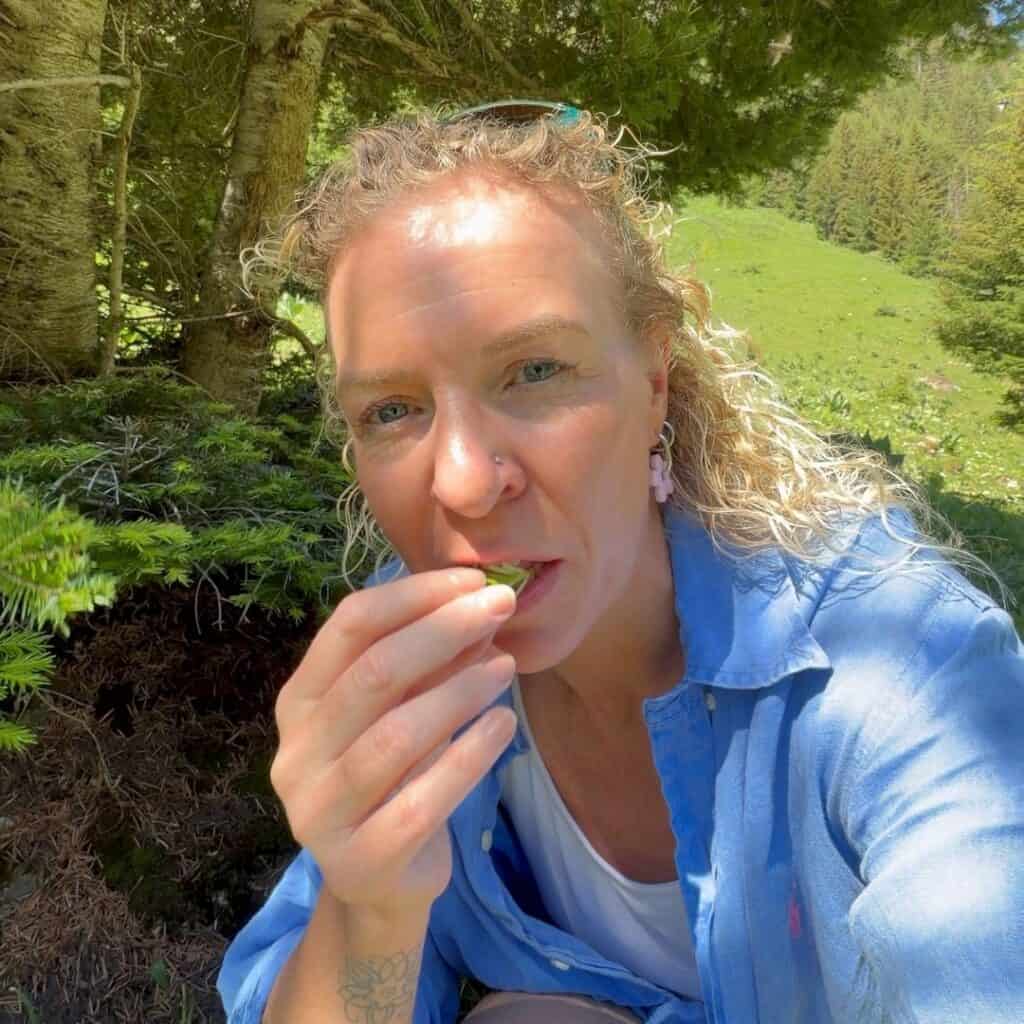
Of course, curiosity got the better of me and I had to taste one.
Fresh fir shoots are perfectly edible and surprisingly intense. The flavour was much stronger than I expected, with a sharp, almost acidic quality that lingered long afterwards. While I'm glad I tried it, I'm not sure I'd rush to eat another handful!
As we moved through the forest, stopping to collect shoots and learn about the local environment, it quickly became clear that this isn't really a hiking activity. The walking was easy and leisurely, with plenty of time to stop, chat and enjoy the scenery. A good pair of shoes is recommended, but most people with a reasonable level of mobility should have no difficulty taking part.
And then there were the views.
Throughout the morning we were treated to sweeping panoramas across the Tarentaise Valley, with the surrounding peaks providing a spectacular backdrop to the experience. It's one of those places where you find yourself constantly stopping to take photos.
Although Dorian guided our group personally, he explained that other mountain guides will also be involved throughout the summer and autumn seasons. Our tour was in French, but English-language visits are also available, making the experience accessible to many of the international visitors who holiday in the area.
For families, the foraging element is likely to be one of the highlights. Children can enjoy learning about the different plants and helping to collect ingredients, while adults will appreciate discovering a side of Alpine life that most visitors never encounter.
How local plants become Alpine liqueurs
One of the biggest things I learned during the experience is that timing is everything.
Many of the plants, flowers, fruits and herbs used by Distillerie de Chantemouche are only available for a short period each year. Miss that window and you miss the flavour, aroma and characteristics that make each ingredient unique.
Take the fir shoots we collected during my visit. They are harvested when the fresh spring growth first appears, while the shoots are still soft, vibrant green and packed with flavour. Wait too long and they become tougher, less aromatic and far less suitable for creating liqueurs.
The same principle applies throughout the season. Elderflower must be picked when the blossoms are fully open but still fresh. Then, bottled on the same day because the flavour is in the pollen – the longer you leave the flowers, the more flavour they lose.
This natural rhythm is what makes the experience so interesting. Rather than working from a fixed list of ingredients, the workshops follow the Alpine growing season. Depending on when you visit, you might be gathering delicate flowers, aromatic herbs, fresh shoots or ripe fruits, each bringing its own character to the finished liqueur.
Freshness is also essential. By collecting ingredients directly from the mountains and using them almost immediately, the distillery is able to capture flavours that would be difficult to replicate using dried or commercially sourced products. And I can confirm this in the flavours of the liquours. I tried the elderflower and it was like nothing I've bought commercially. It tasted how the flowers smell: of pollen, mountains and sunny days.
Sustainability plays an important role too. Throughout the morning, Dorian repeatedly emphasised the importance of harvesting responsibly. The aim is never to strip a plant or take more than nature can comfortably provide. Instead, small quantities are collected from multiple locations, allowing plants to continue growing and ensuring future harvests remain possible.
And perhaps that's what makes these liqueurs feel so connected to the mountains around them. Every bottle begins with ingredients that have been gathered at exactly the right moment, from exactly the right place, before being transformed into something that captures a small part of that Alpine season.
Making your own liqueur
After returning from Plan Pichu with our freshly collected fir shoots, it was time to transform them into something rather more interesting.
One of the highlights of the experience is that visitors don't simply watch the process; they actively take part in creating their own bottle of liqueur to take home.
Step 1: collecting the ingredients
Of course every recipe begins in the mountains!
Step 2: preparing the botanicals
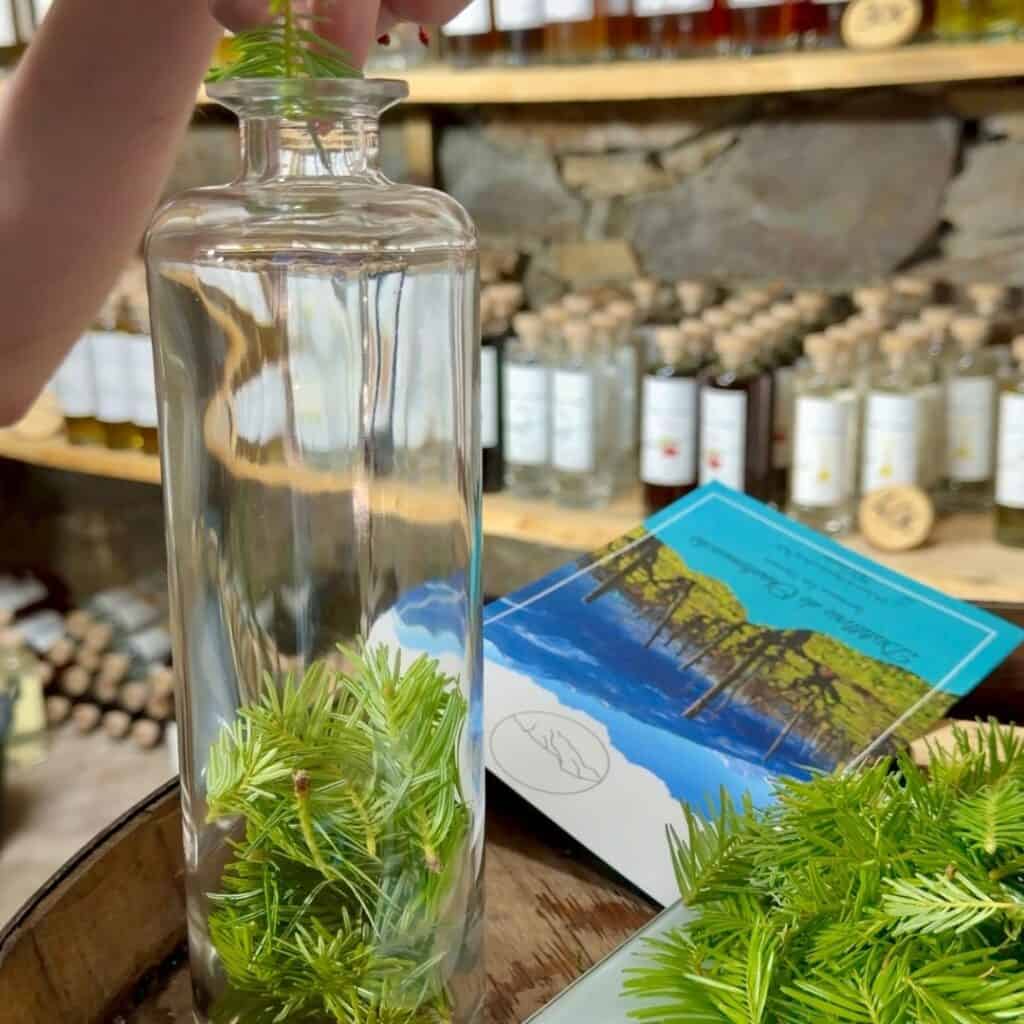
Back at the distillery, we weighed out our ingredients ready for bottling.
For the fir shoot liqueur, each 50cl bottle required approximately 50g of fresh shoots. Carefully weighing the ingredients ensures consistency and helps achieve the desired balance of flavour.
At this stage, it was fascinating to see just how much of the final flavour comes directly from the plants themselves.
Step 3: mixing the recipe
Next came the liquid base.
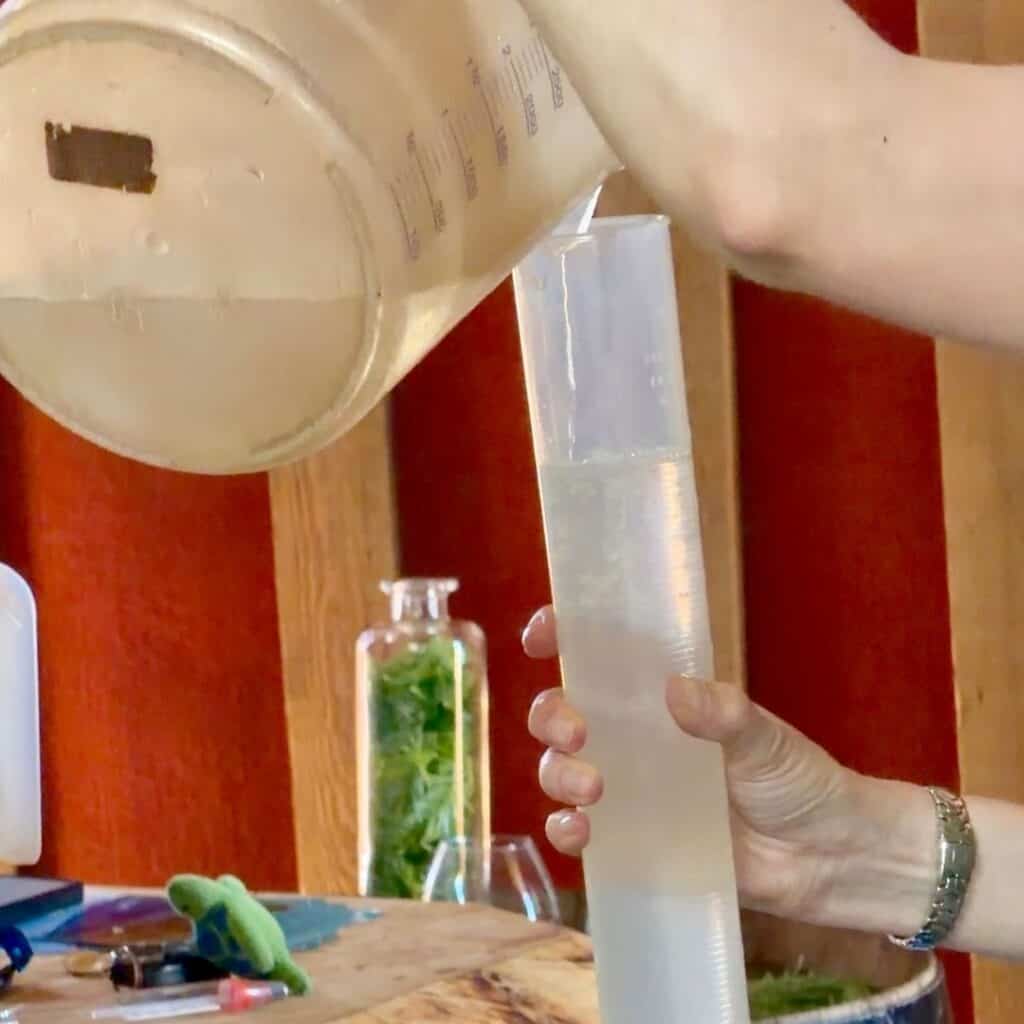
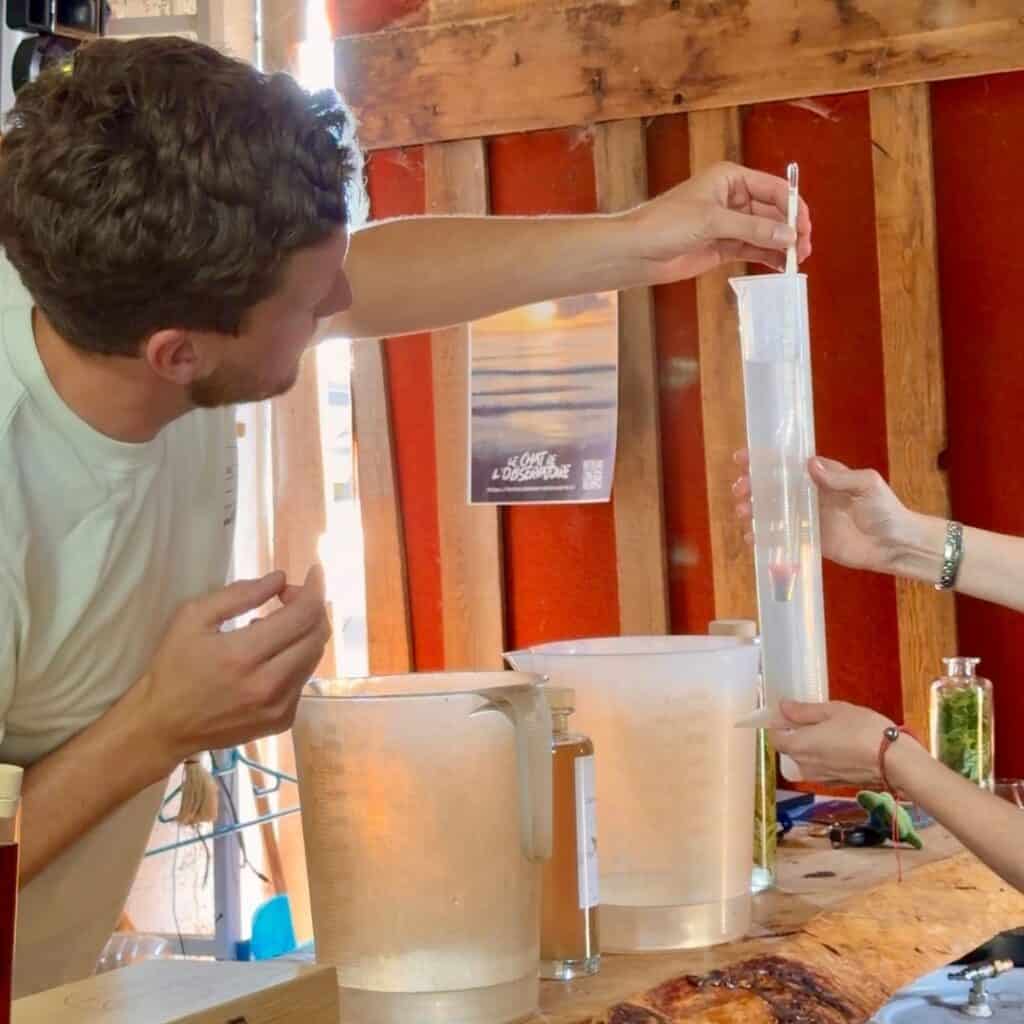
For our liqueur, we combined 250ml of eau de vie with 250ml of water before testing the alcohol content to ensure the mixture reached the target strength of 40%.
Once the alcohol level had been confirmed, sugar was added to create balance and sweetness. Our recipe used around 70g of sugar for a 50cl bottle, although Dorian explained that this can be adjusted depending on personal taste. Those who prefer a sweeter liqueur can simply add a little more.
It was a nice reminder that liqueur making sits somewhere between science and creativity, with precise measurements providing the foundation while still allowing room for individual preferences.
Step 4: bottling
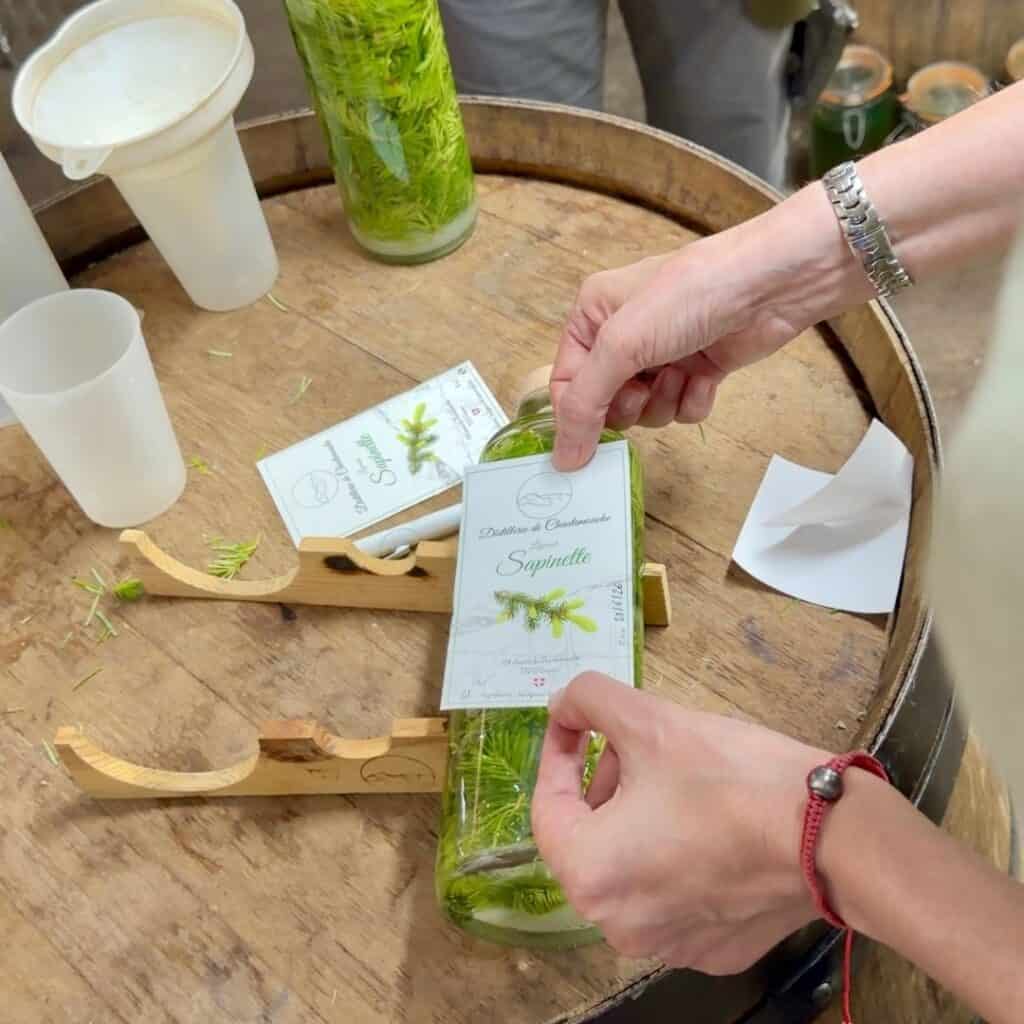
With the ingredients prepared and the mixture complete, it was time to bottle everything up.
Each participant filled and labelled their own bottle before sealing it to let it brew. Our Sapinette will sit for 2 – 3 weeks to be ready to drink. Seeing the finished bottle sitting on the table felt surprisingly satisfying, especially knowing that the key ingredient had been collected by hand just a few hours earlier.
Step 5: taking home a taste of the Alps
Unlike many workshops where the experience ends when you leave, this one comes with a tangible souvenir.
The bottle continues to develop as the botanicals infuse into the alcohol, meaning the flavours evolve over time. In a sense, the process isn't quite finished when you leave the distillery.
Instead, you're taking home a small piece of the Alpine landscape and the memory of a morning spent collecting the very ingredients that helped create it.
Looking for a local gin near La Plagne?
I was so excited to discover during my visit was that Distillerie de Chantemouche also produces its own gin!
Over the years, I've often been asked where visitors can buy locally produced spirits near La Plagne. While it's relatively easy to find local wines, Beaufort cheese, sausages, and other regional specialties, finding a genuinely local gin has proved surprisingly difficult.
So I was buzzing to discover that the answer had been sitting just down the valley below La Plagne.
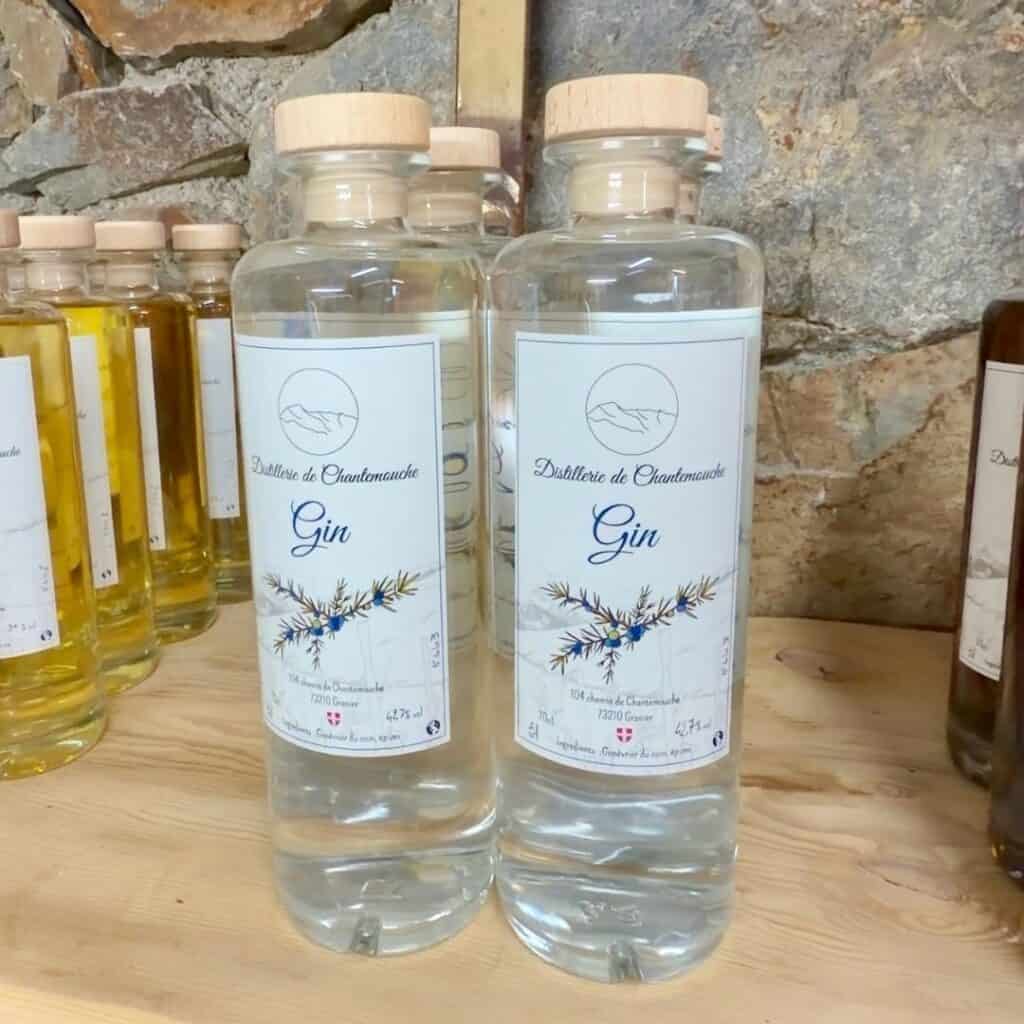
Like the distillery's liqueurs, the gin is produced in small batches using traditional methods and draws inspiration from the surrounding Alpine environment. While every gin starts with juniper berries, local botanicals and carefully selected ingredients help give each producer their own distinctive style.
For visitors looking for an alternative to the usual holiday souvenirs, a bottle of locally produced gin makes a fantastic reminder of a stay in the French Alps. It's also a great option if you're travelling with friends or family who may not normally drink liqueurs but are partial to a good G&T.
Tasting Alpine spirits and liqueurs
Of course, no visit to a distillery would be complete without a tasting.
While the foraging and liqueur-making workshop is a fantastic experience in itself, it's also an opportunity to discover the impressive range of spirits and liqueurs produced at Distillerie de Chantemouche throughout the year.
During my visit, I had to limit myself to trying just three different liqueurs as I was driving home afterwards.
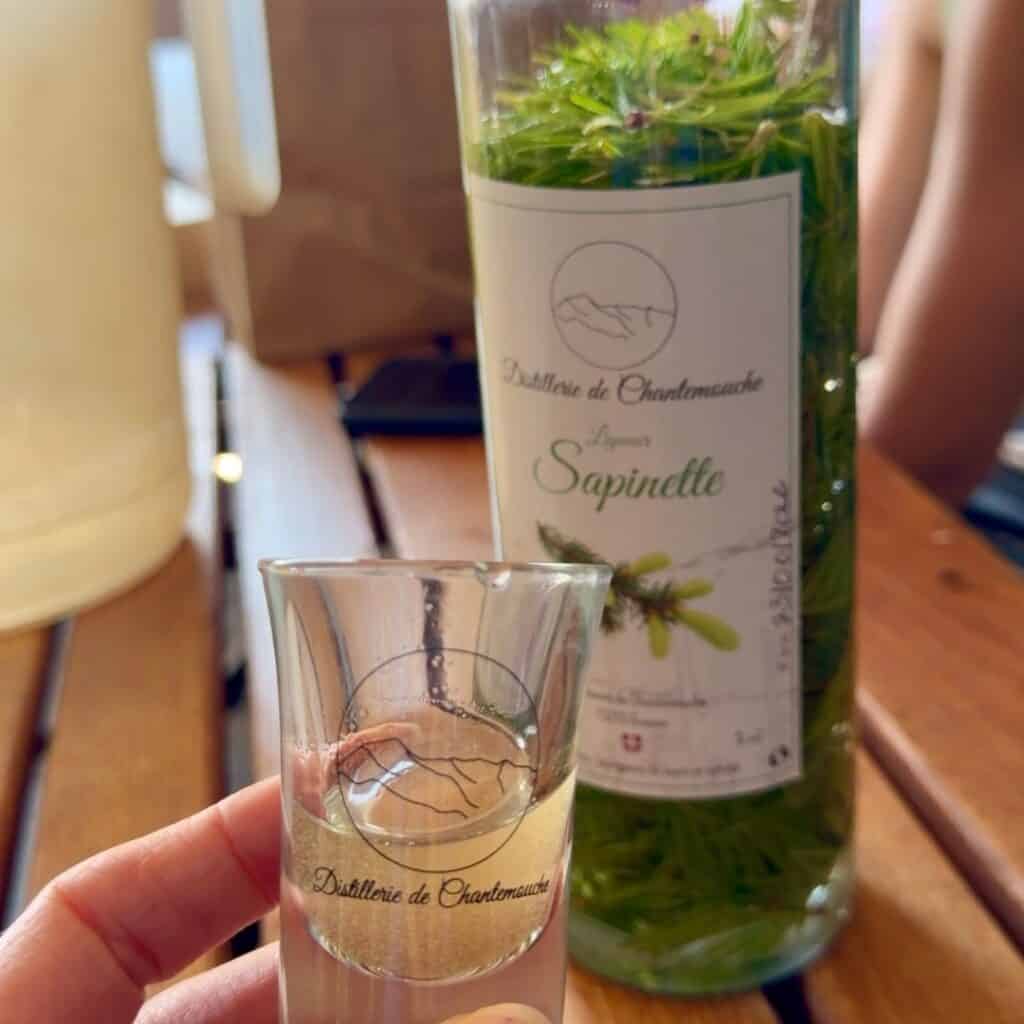
The first was Sapinette, not the bottle we made, but an earlier one. Unsurprisingly, it had a distinctive forest character that immediately brought to mind the mountains surrounding Granier.
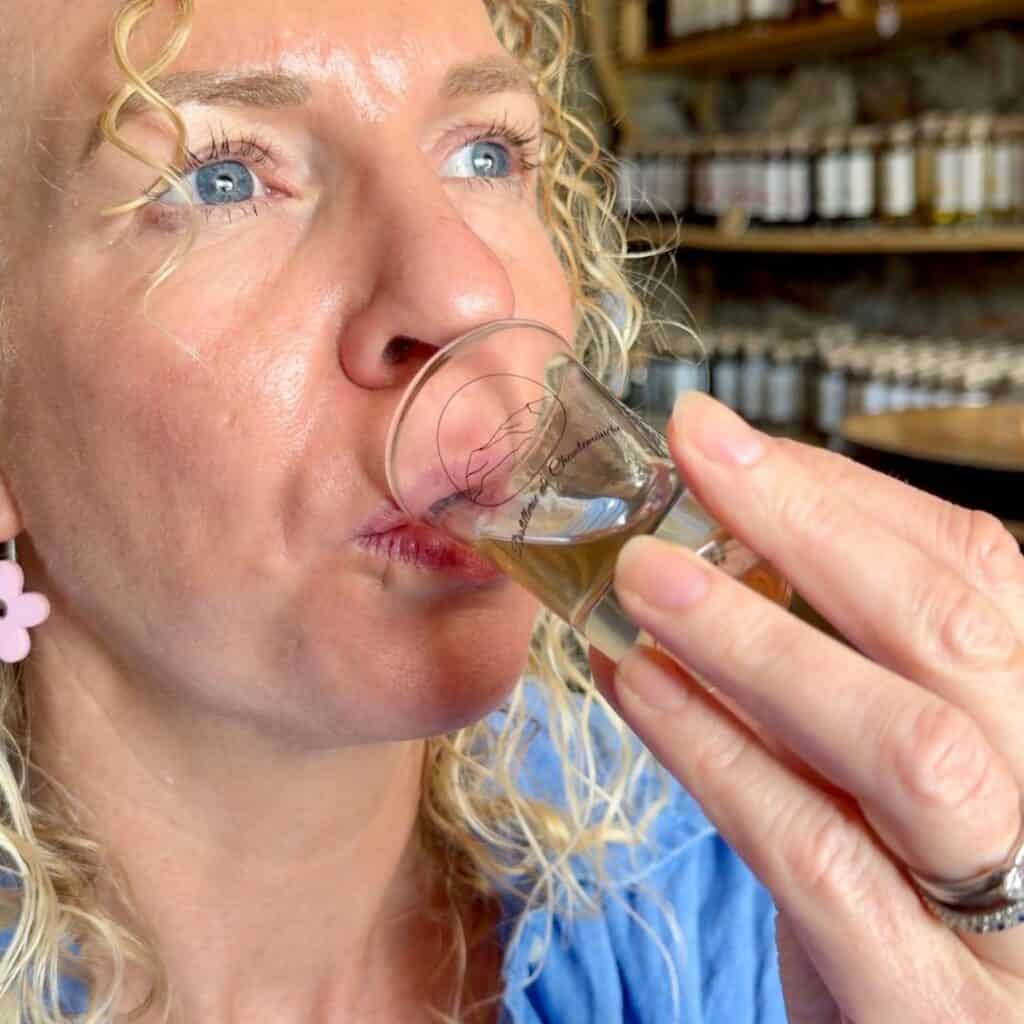
I also sampled a larch liqueur (Mélèze), which was one of the biggest surprises of the tasting. Deeper golden in colour than the Sapinette, it had a softer, fruitier flavour profile that I found particularly enjoyable.
But the standout for me was the elderflower liqueur.
Delicate and floral, it was the bottle that came home with me at the end of the day. It managed to capture the aroma of fresh elderflowers without becoming overly sweet, and I can already imagine enjoying it on a warm summer evening after a day in the mountains.
There were plenty of other bottles lining the shelves that I would have loved to try! I'm sure I'll be heading back for another tasting this summer.
One that immediately caught my attention was the amaretto. As a long-time almond lover, it was already tempting enough, but Dorian suggested using it to make tiramisu, which only made it harder to resist. I suspect that bottle may well be finding its way into my shopping basket on a future visit.
Free liquour tasting sessions at the distillery
While the seasonal foraging experience is undoubtedly the most immersive way to discover Distillerie de Chantemouche, it's not the only option available.
Visitors are also welcome to book a tasting session at the distillery without taking part in the foraging and liqueur-making workshop.
This is a great option for anyone who wants to sample a range of Alpine spirits and liqueurs without committing to a half-day experience.
During a tasting session, you'll have the opportunity to meet the team, learn about the ingredients and production methods, and try a selection of the distillery's creations. Although what is being made will vary from week to week, there is a large selection of all the different liqueurs to try throughout the year.
The tastings are particularly well suited to an afternoon outing after lunch or as an early evening activity before dinner. Even better, the tastings are currently offered free of charge!
As the distillery is a small artisan operation rather than a visitor centre with fixed opening hours, advance booking is essential.
How to book the experience?
If you're looking for something a little different from the usual hiking, biking and sightseeing activities around La Plagne, it's well worth considering.
One of the things I enjoyed most about the experience was how relaxed and accessible it felt. Our morning involved a short drive from the distillery followed by a leisurely walk with plenty of stops to learn about the local environment, collect ingredients and enjoy the views.
Duration
Our experience ran from approximately 10am until 2pm, including the foraging session, liqueur-making workshop, picnic lunch (we brought with us) and tasting at the distillery.
Walking difficulty
Easy.
The walk during our session was very gentle and suitable for most visitors. The exact route may vary depending on the ingredient being harvested, but the focus is on discovering local plants rather than covering large distances or tackling difficult terrain.
Suitable ages
The experience is designed primarily with adults in mind due to the tasting element, but families are welcome to join the foraging and workshop activities.
Children will likely enjoy the outdoor aspect of the experience, learning about local plants and helping to collect ingredients.
What to bring
For my visit, I found the following useful:
- Comfortable walking shoes or light hiking footwear
- Water
- Sun cream
- A camera or phone for photos
- A picnic lunch to enjoy at the distillery
Cost
At the time of writing, pricing is expected to be between €70 and €100 per person.
The experience includes the guided foraging session, workshop and your own bottle of liqueur to take home.
Booking information
To book or enquire about availability, contact the distillery directly:
Email: distilleriedechantemouche@gmail.com
Telephone: 06 38 79 21 07
Availability
The experience is available now and runs throughout the summer, with the ingredients and recipes changing as the season progresses.
Even outside the main foraging season, Distillerie de Chantemouche remains open for tastings and visits during autumn and winter, offering visitors the opportunity to discover the distillery and sample its range of Alpine spirits and liqueurs year-round.
As this is a small-scale, artisan experience with limited group sizes, I'd recommend booking in advance, particularly during the peak summer holiday period.
Is it worth it?
Absolutely.
What makes this experience so enjoyable is that it offers far more than a traditional distillery visit. Rather than simply turning up for a tour and tasting, you're invited to become part of the process from the very beginning.
One moment you're standing on a mountainside, learning about the plants growing around you and collecting ingredients by hand. A few hours later, you're back at the distillery, transforming those same ingredients into your own bottle of Alpine liqueur.
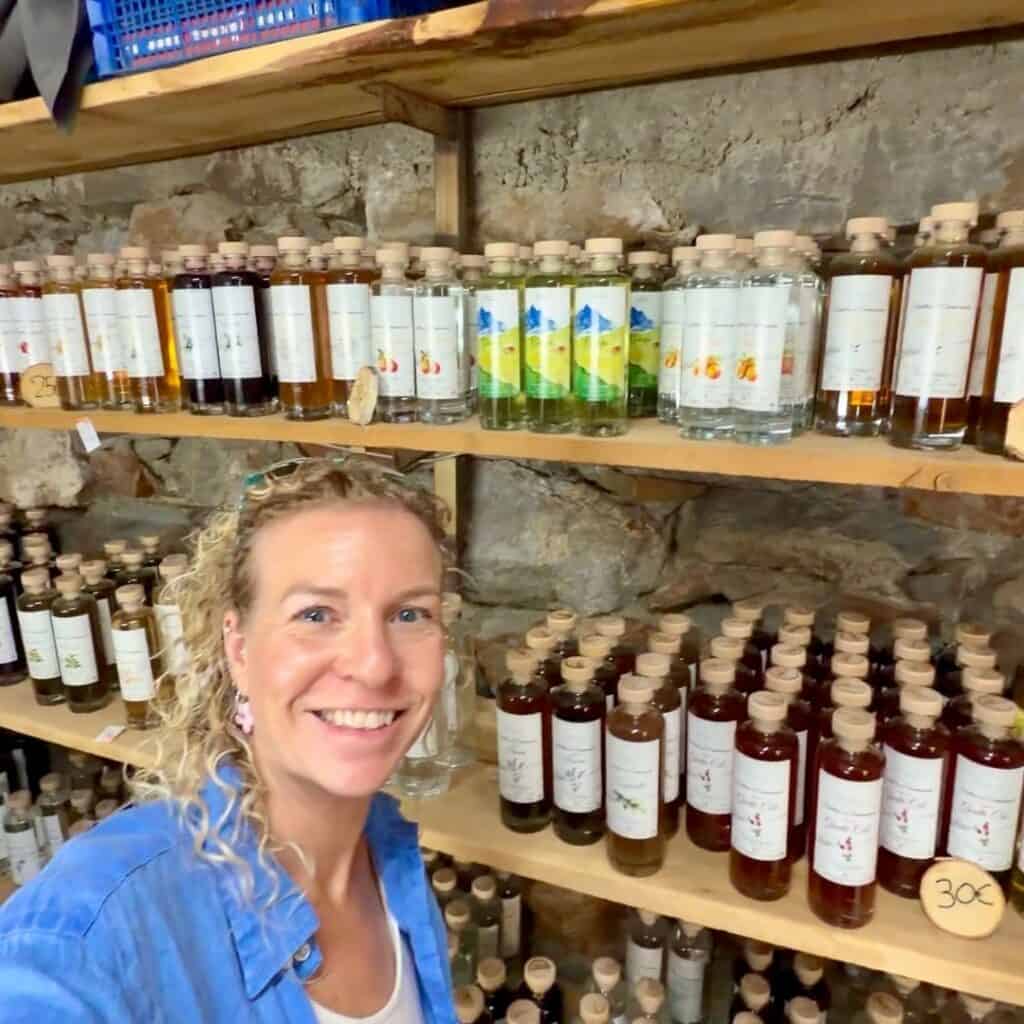
It's a great, immersive way to connect with the landscape and discover a side of mountain life that many visitors never get to see.
I also loved the fact that the experience changes throughout the year. In a region where so many activities remain the same year after year, there's something refreshing about an experience that evolves with the mountains themselves.
The setting certainly helps too. Between the spectacular views, the peaceful forests and the chance to spend time with passionate local producers, the experience feels authentically rooted in the Tarentaise rather than something designed purely for tourists.
For me, that's what makes it special.
Whether you're interested in local food and drink, traditional Alpine culture, mountain plants or simply looking for a unique activity near La Plagne, Distillerie de Chantemouche offers an experience that's both educational and genuinely enjoyable.
And at the end of it all, you'll leave with something rather better than a souvenir: a bottle of liqueur that tells the story of your morning in the mountains.
Looking for more local food and drink experiences?
Read my guides to Savoie wines, Alpine sparkling wines local Genepi producers and visiting the vineyards of the Tarentaise Valley.
Frequently asked questions about Distillerie de Chantemouche
Where is Distillerie de Chantemouche?
Distillerie de Chantemouche is located in Granier, a traditional mountain village above Aime in the Tarentaise Valley. It's around a 20-30 minute drive from most La Plagne villages, making it an easy excursion during a summer holiday.
Where is Distillerie de Chantemouche?
Distillerie de Chantemouche is located in Granier, a traditional mountain village above Aime in the Tarentaise Valley. It's around a 20-30 minute drive from most La Plagne villages, making it an easy excursion during a summer holiday.
How long does the distillery experience last?
The experience lasts approximately four hours. During my visit, we met at 10am and finished around 2pm, including the foraging session, liqueur-making workshop, picnic lunch and tasting.
What ingredients will we forage?
That depends entirely on the season.
One of the unique aspects of the experience is that the ingredients change throughout the year. Depending on when you visit, you may collect fir shoots, elderflower, acacia blossom, larch buds, mint, raspberries or other locally available botanicals.
Do I need to be a hiker?
No.
The walking involved during my visit was very gentle and suitable for most people with a reasonable level of mobility. The focus is on learning about local plants and collecting ingredients rather than completing a strenuous hike.
Is the experience suitable for families?
Yes… kind of!
While the tasting element is aimed at adults, children can still enjoy the foraging, outdoor exploration and liqueur-making process. Families interested in nature and local traditions are likely to enjoy the experience.
What should I bring?
I'd recommend bringing:
Comfortable walking shoes
Water
Sun cream
A camera or phone
A picnic lunch
The exact requirements may vary slightly depending on the season and weather conditions.
Can the experience be conducted in English?
Yes.
My visit was conducted in French, but English-language experiences are available. Dorian and the team are keen to welcome international visitors and can adapt the experience accordingly.
Do I get to take home what I make?
Yes.
One of the highlights of the workshop is creating your own bottle of liqueur to take home at the end of the experience.
Can I visit the distillery without joining the foraging workshop?
Yes.
Distillerie de Chantemouche also welcomes visitors for tastings and purchases, making it possible to discover their products even if you don't join the full experience. The tasting sessions need to be booked in advance.
What products are made at Distillerie de Chantemouche?
The distillery produces a wide range of spirits and liqueurs, including seasonal creations made from locally foraged ingredients. Depending on availability, this may include elderflower, fir shoot, larch, raspberry and mint liqueurs, as well as locally produced gin and other specialities.
How much does the experience cost?
At the time of writing, prices are expected to be between €70 and €100 per person, including the workshop and your own bottle of liqueur to take home. Check with the distillery directly for current pricing.
How do I book?
Bookings can be made directly with Distillerie de Chantemouche by email or telephone.
Email: distilleriedechantemouche@gmail.com
Telephone: 06 38 79 21 07
